(1).png)
News:
Owners Developers & Managers
Posted: October 7, 2016
Follow-up to SJC decision on GHG emissions limits - by Susan Bernsteihn
 Susan Bernstein, attorney at law
In May of this year, the Massachusetts Supreme Judicial Court (the SJC) ruled that the state’s Global Warming Solutions Act (the Act) required the Massachusetts Department of Environmental Protection (MADEP) to impose a limit on greenhouse gas emissions (GHG), limit the aggregate emissions released from each group of regulated sources, set emissions limits for each year, and set limits that decline on an annual basis, all in order to meet the requirements of §3(d) of the Act. The SJC decision in Isabel Kain and others vs. the MADEP, has forced the MADEP to respond.
On September 16, the Massachusetts governor Charles Baker issued Executive Order (EO) Number 569 to address the SJC’s requirements. The EO directs the state’s Executive Office of Energy and Environmental Affairs to coordinate the response to the SJC’s decision by August 11, 2017 and to ensure the state meets the deadlines for emission limits enunciated in the Act.
The EO contains three substantive sections that address how the state will address the SJC’s mandate, amidst the recognition that certain sectors continue to drive the emission levels: Section 1: consult the Act’s advisory committee to recommend limits, expand strategies, work with the transportation sector, reform regional wholesale electric energy and capacity markets for clean energy, and issue a comprehensive energy plan every two years; Section 2: MADEP to promulgate regulations to ensure the Act’s 2020 emission limits are met, revise the Act’s requirements for the transportation industry to establish declining annual aggregate emission limits, place limits on emissions from natural gas, and monitor new/expanded/or renewed emissions permits and approvals; and Section 3: require the Executive Offices of Public Safety and Energy and Environmental Affairs to publish a Climate Adaptation Plan regarding climate issues, establish frameworks for both the state and local municipalities to assess the vulnerability of climate change, and update such Plan every five years.
While some may acknowledge that the existing laws and regulations have already emphasized the intention of the Act and have set in motion a framework to reduce emissions and to address these issues, the weight of the SJC’s decision will clearly result in bolstering these efforts.
Susan Bernstein is an attorney at law, Needham, Mass.
MORE FROM Owners Developers & Managers
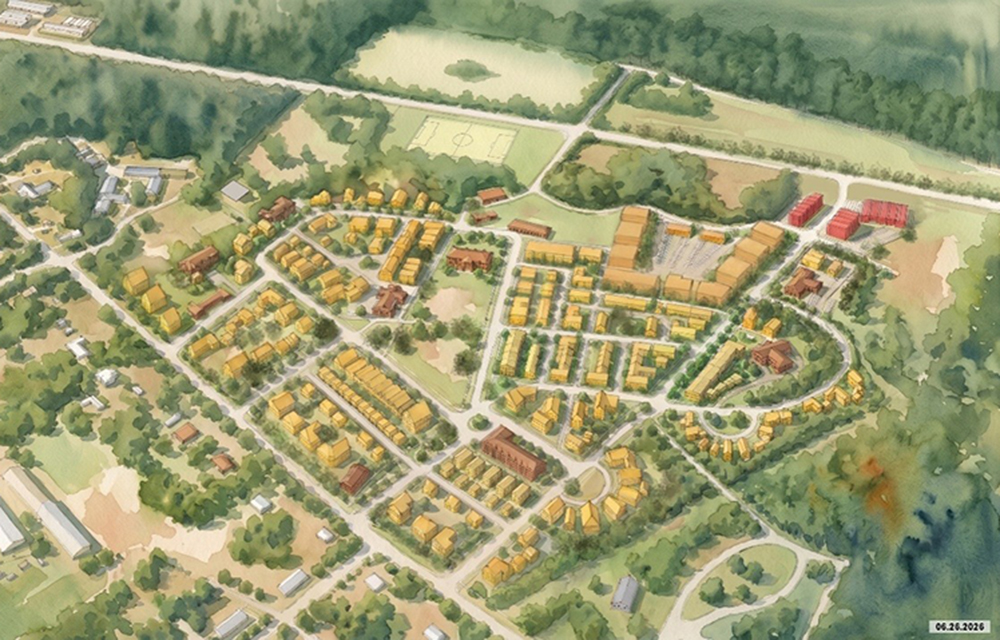
Healey-Driscoll Administration seeks developer to transform former 72-acre school into 288+ home neighborhood
Lancaster, MA According to the Healey-Driscoll Administration, the Division of Capital Asset Management and Maintenance (DCAMM) has released a Request for Proposals seeking a developer to transform the 72-acre former Lancaster Industrial School for Girls property into a new, walkable neighborhood with at least 288 homes.






Quick Hits
 (1).png)

Columns and Thought Leadership

IREM president’s message: Our new reality - Staying ahead of supply chain delays - by Yoany Vargas
Supply chain delays are slowing construction, ratcheting up operating costs, and extending turnover timelines across Greater Boston, directly reducing revenue and increasing the workload for multifamily and

The legislature has spoken: New Hampshire doubles down on housing in commercial zones - by John Sokul
Last year, the New Hampshire Legislature enacted HB 631, a landmark housing measure requiring municipalities to permit multifamily housing in commercially zoned districts. The law generated

Revitalized Town Centers: Retail??? - by Carol Todreas
It is now widely accepted that customers want to shop in person at physical stores. Brands know that they do better business in a physical store than just on line so they want to open stores. Demand for retail space by digital merchants, local entrepreneurs, and newly developed national chains

Retail infill strategy to activate Pawtucket’s Conant Thread District - by Gaetan Kashala
Until recently, the Conant Thread District consisted of approximately 150 acres of underutilized industrial land spanning Pawtucket and Central Falls. Today, the area is one of the most significant
September Promotion