


 (1).png)
News:
Owners Developers & Managers
Posted: February 26, 2016
Interpreting what is like-kind - by Patrica Flowers
 Patricia Flowers, Investment Property Exchange Services
Many things are open to interpretation, so when hearing the terms “exchange” and “like-kind,” certain assumptions may be incorrect. One of the more common is: “I am selling an office building so I have to look for replacement property that is an office building because of the “like-kind” requirement.”
For real property transactions (rental units, office buildings, strip malls, land, etc.) the “like-kind” requirement does not mean selling and buying the exact same type of property. 1031 exchanges are often called “like-kind exchanges” because that is the language used in the tax code. However, the IRS takes a very broad view of this in the case of real property. The regulations state that “all real property is like-kind to all other real property,” so it is really not about what it looks like, it’s grade or quality, but more like-kind in how it is used, for income or investment purposes.
For example, you can sell land and purchase a multi-family rental or sell an apartment building and purchase commercial. Surprisingly, fee simple interest in real estate is like-kind to a 30-year leasehold or a tenant-in-common interest in real estate. All great ways to diversify a portfolio!
However the “like-kind” definition for equipment /personal property is not as flexible. The regulations for personal property such as machinery, business vehicles, fishing vessels, artwork, etc. are far more restrictive and need to be reviewed case by case to be sure the items are of like-kind (i.e. a crane for a crane or a painting for a painting) or like-class. The “like-class” distinction applies to tangible, depreciable business use assets that are included within the same general asset class or product class. This allows a 1031 Exchange of an airplane for a helicopter, or a bulldozer for a backhoe or other item of construction machinery and equipment.
“Like-kind” exchanges continue to offer both real and personal property owners a great opportunity to move assets and reinvest their equity.
Patricia Flowers is VP for Investment Property Exchange Services (IPX1031), Boston.
MORE FROM Owners Developers & Managers
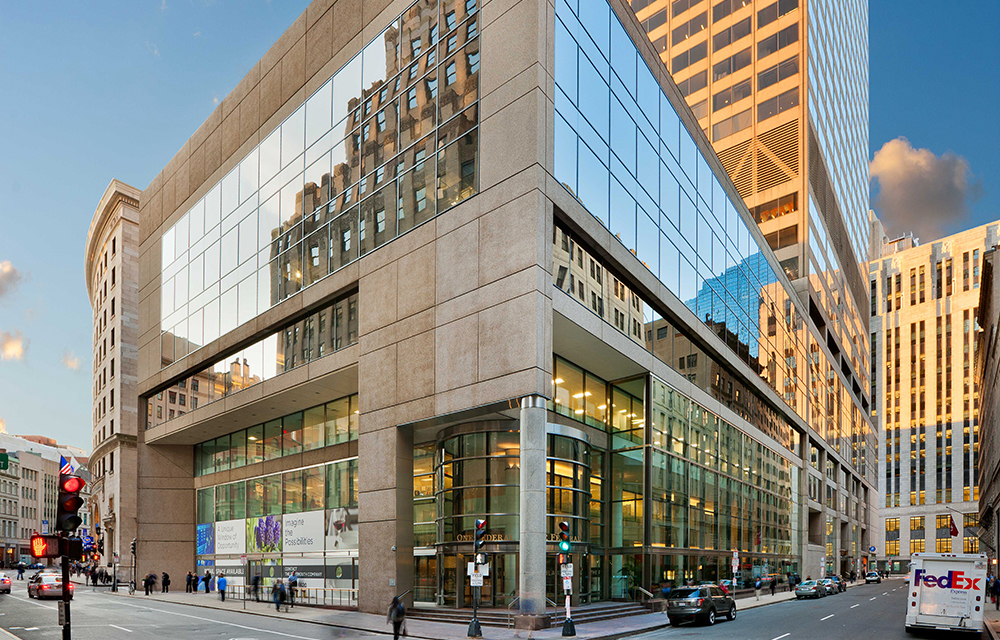
Rubin Rudman to establish headquarters at Tishman Speyer’s One Federal St.
Boston, MA Tishman Speyer has secured a new headquarters lease with Rubin Rudman at One Federal St., its 38-story, 1.1 million s/f tower in the Financial District. Under a 15-year lease, Rubin Rudman’s new headquarters will span 57,844 s/f across One Federal’s entire 23rd and 24th floors and a portion of the 25th floor.








Columns and Thought Leadership

IREM president’s message: Our new reality - Staying ahead of supply chain delays - by Yoany Vargas
Supply chain delays are slowing construction, ratcheting up operating costs, and extending turnover timelines across Greater Boston, directly reducing revenue and increasing the workload for multifamily and

Retail infill strategy to activate Pawtucket’s Conant Thread District - by Gaetan Kashala
Until recently, the Conant Thread District consisted of approximately 150 acres of underutilized industrial land spanning Pawtucket and Central Falls. Today, the area is one of the most significant

Revitalized Town Centers: Retail??? - by Carol Todreas
It is now widely accepted that customers want to shop in person at physical stores. Brands know that they do better business in a physical store than just on line so they want to open stores. Demand for retail space by digital merchants, local entrepreneurs, and newly developed national chains

The legislature has spoken: New Hampshire doubles down on housing in commercial zones - by John Sokul
Last year, the New Hampshire Legislature enacted HB 631, a landmark housing measure requiring municipalities to permit multifamily housing in commercially zoned districts. The law generated