


 (1).gif)
News:
Finance
Posted: August 8, 2013
MassHousing provides $52.4 million for 359 apartments owned by four local Community Development Corporations
Workers are on site installing new systems and rehabilitating 359 apartments owned by four local Community Development Corporations (CDCs) as a result of $52.4 million financing provided by MassHousing, the state's affordable housing bank.
Additionally, the financing will result in all 359 apartments being preserved as affordable for the long term to low-income residents.
The loans to Urban Edge Housing Corp., Codman Square Neighborhood Development Corp., Lena Park Community Development Corp., and Nuestra Communidad Development Corp. helped to pay off old loans on the properties and prevented the previous lender from foreclosing. Foreclosures could have put the future of the affordable units in doubt.
MassHousing provided $12 million ($7.6 million in bridge financing and a $4.4 million permanent loan) to Urban Edge, which has 82 apartments on seven sites in the Columbus Ave., Seaver St. and Minden St. areas of Roxbury and Jamaica Plain.
Lena Park, which entered into an agreement with Urban Edge to manage and rehabilitate its103-unit LBB Apartments, received $13.5 million ($9.5 million in bridge financing and a $4 million permanent loan). The 103 LBB Apartments are located on 8 sites in the Blue Hill Ave., Glenway St., Talbot Ave., Wellington Hill St.,Fessenden St. and Esmond St. area in Dorchester and Mattapan.
The two projects created a combined 380 construction jobs, of which 137 were new hires.
Codman Sq. received $12.3 million ($11.2 million in bridge financing and a $1.1 million permanent loan). The Codman Sq. Apartments include 80 apartments on nine sites in the Dorchester Ave., Washington St., Capen St., Gaylord St. and Norfolk St. areas in Dorchester. The project resulted in more than 50 construction jobs.
Nuestra received $14.4 million ($11.1 million in bridge financing and a $3.3 million permanent loan) for the 96-unit Washington Park Apartments, which are located in six buildings on Wyoming St., Walnut Ave. and Columbus Ave. in Roxbury.
"Without this financing nearly 400 units of affordable housing were in danger of being lost," said MassHousing executive director Thomas Gleason. "This financing will allow for significant renovation of all these properties and puts them on firm financial footing for years to come."
The project created more than 130 construction jobs of which Nuestra worked to recruit large percentages of minority (50%) and women (10%) workers and Boston residents (50%).
In addition to the MassHousing financing, the state Department of Housing and Community Development and the city of Boston provided additional resources for the projects.
In the late 1980s, using private bank loans and government subsidies, the CDCs purchased the apartments as part of a coordinated, public-spirited effort to revitalize undeveloped and/or vacant properties located along major thoroughfares like Columbus Ave., Seaver St., Blue Hill Ave. and others.
But the properties were soon buffeted by the real estate crash of the late 1980s and early 1990s. Despite sporadic infusions of financial support over the years the apartments were never able to generate the revenue necessary to support their debt.
While the properties were privately managed and have remained in decent condition over the years, their financial future and their ability to fund long-term repairs and upgrades was increasingly in doubt. Additionally, the CDCs were hampered by the debt on their books, which made it more difficult for them to move ahead with other community-based development projects.
With the refinances, the future is brighter for the residents, properties and the CDCs.
The finances for all the buildings have been completely restructured and old debts have been retired. The new loans can now be supported for the long term. The CDC's balance sheets have been right-sized and they now look to the future without worry that these apartment portfolios might hinder their ability to finance new endeavors.
All of the properties are undergoing extensive improvements and upgrades, including exterior building masonry, porches, windows, balconies and roofs, as well as substantial system repairs and upgrades including new fire alarm and sprinkler systems, high-efficiency boilers, updated wiring and lighting and new building insulation.
Interior improvements to the properties include new electric stoves, selective kitchen and bathroom replacement, energy-efficient lighting and appliances, and selective floor and door replacements.
As a condition of the MassHousing financing, all 359 apartments will be affordable. Previously, only 25% of the units owned by three of the CDCs, and 20% owned by the fourth, were required to be affordable with the remaining apartments rented at market rates.
Tags:
Finance
MORE FROM Finance
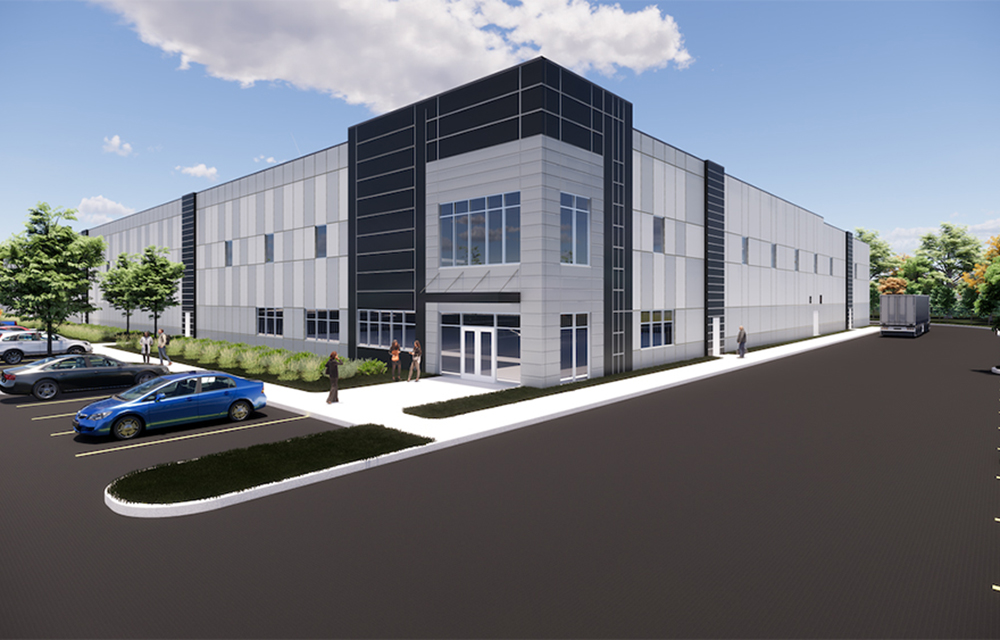
Berkeley Garbe secures $35.4 million debt financing with MetLife Investment Management
Billerica, MA Berkeley Garbe has secured a $35.4 million financing package for 161 Concord Rd., a new advanced manufacturing and innovation hub that is 30% complete following the start of construction in June. The project is on track to be completed in April 2027.
 (1).gif)


Columns and Thought Leadership

Reverse exchanges and the challenges of a competitive real estate market - by Michele Fitzpatrick
Our current, highly competitive real estate market poses specific challenges for investors who are considering taking advantage of a tax-deferred 1031 exchange. In this market, investors will have no problem selling their current property if priced properly, but they may find it difficult to find a suitable replacement property

Are appraisers on the same page as the assessor? - by Richard Seman
The purpose of this article is to address problematic or confusing issues which may help assessors and appraisers to better understand how to value real estate for tax assessment purposes.

The focus on price per s/f compared to the comparable sales used in the appraisal report - by Dennis Chanski
Over the past several weeks, I have completed appraisal assignments for private clients. Interestingly, after submitting these appraisals, I received several phone calls – not to question the value, content, or any incorrect information, but rather to discuss the price per s/f compared to the comparable sales used in the report.

Massachusetts real estate transfers over $1 million face new tax rules as of November 1st - by Daniel Meyer
Attention to owners of real estate in the Commonwealth (and the title companies and other professionals who advise them), the Massachusetts Department of Revenue (the “DOR”) recently adopted a new “millionaire’s tax” via 830 CMR 62B.2.4
