


 (1).gif)
News:
Finance
Posted: May 7, 2015
Norman's Boston, our Boston: Pioneered buildings that define the city
Norman Leventhal died recently at the age of 97. In his life's work at the Beacon Companies, he pioneered remarkable buildings and urban environments that have come to define Boston for so many of us. He played an essential role in making Boston the surprising and constantly engaging city it has become-this despite the best efforts of the city's 60's & 70's redevelopment. Here are some notable projects.
I worked within a stone's throw of Post Office Sq. and during my time there I had a chance to see the development of this jewel. The many features incorporated in that project-clean concrete, music, cards showing location-have since become commonplace in many urban parks. So a little history on this project is worth remembering.
Boston's old Parking Garage Unit 3 was a four-story, 950 car garage built in 1954 on city-owned land and was leased to a garage and taxi magnate to entice business back to the downtown retail area. The garage was an eyesore, was poorly maintained, and its poor access created traffic jams regularly on Congress St.
In the late 1970s, Norman Leventhal obtained and redeveloped the property on Pearl St. abutting the garage. With the opening of an adaptive reuse project nearby, Leventhal found it desirable to remove the garage eyesore. The Friends of Post Office Square, Inc. was founded to create public green space (privately maintained) to be funded by an underground garage. After an extended wrangle with the owner of the garage, the garage was purchased in 1987, and the result is what we see today, a serene park under which are many floors of parking. The urban oasis is still kept spotlessly clean. When I come into Boston now I always park there, even if it means walking a little bit further, and in my mind, I thank Norman.
An early endeavor, completed in 1969 was Center Plaza, the long, curved office/retail property across from City Hall which retains the curve of historic Pemberton Sq. Norman always said that was one of his favorite projects.
As was his work on South Station. Developed as part of a public-private partnership, the South Station project preserved the station's landmark neoclassical façade. The interior was successfully repurposed as a transit hub with public and commercial spaces. The renovated station opened in 1989. I've picked up many visitors and my kids there over the years. Nearly all comment on the beautifully preserved and adapted space.
Other projects with which Norman was involved and that have influenced and helped define modern Boston include the Hotel Meridien (now the Langham), a 1922 Renaissance Revival style building built for the Federal Reserve Bank of Boston.; 75 State St., an ambitious project that became an iconic addition to the Boston sky line; Rowes Wharf; and One Post Office Sq. Norman also played a key role with other Boston business leaders to ensure open spaces, like the Rose Kennedy Greenway, were part of the Big Dig. (Thank you, Norman.)
The Norman B. Leventhal Map Center at the Boston Public Library is another important resource for anyone interested in the history and land development of Boston. Map collecting started as a hobby for Norman and apparently became closer to an obsession as the collection grew to more than 400 rare and historic maps showing changes in Boston over the past 300 years. Norman gave his collection to the Boston Public Library so the maps could be easily available to scholars and the general public. He funded the map center with a $10 million gift in 2004. Much of the map collection is now digitized. If you haven't explored the collection, you should: http://maps.bpl.org/view_collection
Norman's contributions to the fabric of the City where he lived and worked for many years are immense. Whether through his direct development, his influence, or others following his vision and his lead, he helped create the scalable, approachable, breathable city that Boston has become in this millennium. I had a chance to meet and speak with Norman, unassuming, soft spoken, and always dignified, many times. I am glad I had the honor and pleasure. He has left us much to remember him by, and he has left the citizens of Boston and its visitors many gracious gifts. Yes, Norman, thank you.
Bill Pastuszek, MAI, ASA, MRA, heads Shepherd Associates, Newton, Mass.
MORE FROM Finance
Northwest Bank finances Luzern Associates’ $47.75m acquisition
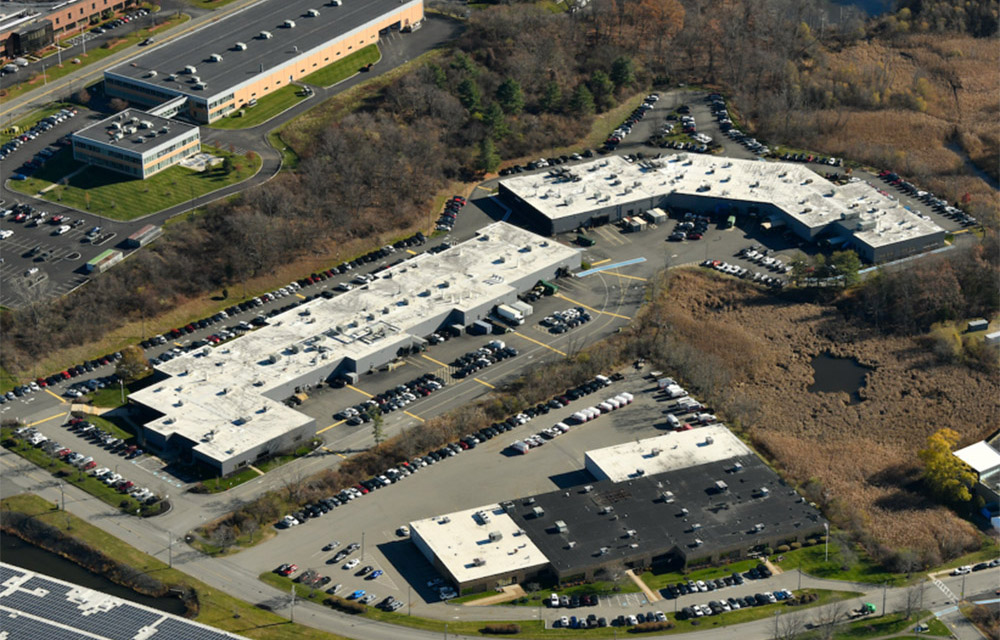
Danvers, MA Northwest Bank provided $34.5 million in financing to support Luzern Associates LLC’s $47.75 million acquisition of the Cherry Hill industrial portfolio, a three-building campus totaling 200,000 s/f.

 (1).gif)


Quick Hits

.png)
Columns and Thought Leadership

Are appraisers on the same page as the assessor? - by Richard Seman
The purpose of this article is to address problematic or confusing issues which may help assessors and appraisers to better understand how to value real estate for tax assessment purposes.

The focus on price per s/f compared to the comparable sales used in the appraisal report - by Dennis Chanski
Over the past several weeks, I have completed appraisal assignments for private clients. Interestingly, after submitting these appraisals, I received several phone calls – not to question the value, content, or any incorrect information, but rather to discuss the price per s/f compared to the comparable sales used in the report.

Massachusetts real estate transfers over $1 million face new tax rules as of November 1st - by Daniel Meyer
Attention to owners of real estate in the Commonwealth (and the title companies and other professionals who advise them), the Massachusetts Department of Revenue (the “DOR”) recently adopted a new “millionaire’s tax” via 830 CMR 62B.2.4

Reverse exchanges and the challenges of a competitive real estate market - by Michele Fitzpatrick
Our current, highly competitive real estate market poses specific challenges for investors who are considering taking advantage of a tax-deferred 1031 exchange. In this market, investors will have no problem selling their current property if priced properly, but they may find it difficult to find a suitable replacement property
