


 (1).gif)
News:
Finance
Posted: April 9, 2015
Who will absorb America's next housing boom?
You have heard me, and many others, discuss the future of housing in context of baby boomers and Millennials (Generation Y). Not many mention Generation X, the group in between, who by comparison sometimes feel like America's overlooked middle child.
While each generation overlaps at the extremes, each is also known for certain archetypal characteristics. Each group is also conveniently placed in approximately 20 year increments. Thus, baby boomers are age currently 51-69, followed by the middle Generation Xers age 35-50, followed by the Millennials age 18-34. It is also important to note that the boomer generation of 74.9 million people is being surpassed by the Millennials as we speak, both of which were bubbles overshadowing the Generation Xers of approximately 65 million people, a baby bust by comparison.
While baby boomers were doted over, and grew up as a large and powerful, some say narcissistic and petulant group, clearly made cynical by Vietnam and other societal norms, Generation Xers grew up to be more conservative, focused, family oriented and even altruistic. They were often brought up with less attention, less parental oversight due to dual career families, more often left to be on their own, relying on their own skills and instincts to survive. Many Xers responded by battening down the hatches, fending for themselves and compartmentalizing social problems of the era, such as divorces, for example which were then at the highest rate in American history. Despite being ignored, or perhaps because of, they developed a resilience and ironically a willingness to take risks, becoming one of the first large entrepreneurial groups.
Let's get back to their real estate interests. They entered the workforce in the roaring 90s, expecting great jobs and potential riches, during the wild years of "irrational exuberance". The first wave at age 35 saw new opportunities, and the last wave at age 25 was dreaming about seven figure stock options. Yet, Xers have faced some difficult times. Some say they caused the real estate bust of 2006, and most agree they are victims of it. With good jobs, relatively low cost money and easy credit, they invested aggressively in stocks and housing. The great recession struck Xers much harder in percentage wealth decline than any other participating generation. Some statistics show the then 35-55 year old people lost as much as 50% of median household net worth, as compared to 5% for the oldest baby boomers. Also, although much younger than boomers, they have also been less successful in re-entering the job market than boomers. Today, there are more workers older than 55 in the workforce than there are in the 35-45 group.
It is only recently that Gen Xers have been able to sell their homes. A year ago, they remained the largest group who were underwater on home mortgages. In some areas like Los Angeles, values of their homes were half of the mortgages. Most recently, however, they have become the largest successful sellers of real estate. With market improvements, they recently achieved approximately 27% of all sales. Their buyers have certainly not been baby boomers, who have been downsizing. According to an NAR study, for the second consecutive year, the largest group of recent buyers has actually been the Millennial generation, who were 32% of all buyers.
Gen Xers have had the sharpest drop in home ownership of all of the age cohorts since the recession struck, far outpacing the national rate. So, don't count on the Generation X group to pick up any slack in the housing market. With the market improving, they have become successful sellers, not buyers, of real estate. Those who have weathered this storm, however, age-wise are either in charge or soon to be in charge of America's companies as baby boomer CEOs start to retire. Probably because of the recession, these successful Gen Xers have become more conservative, and playing by the numbers and big data, have trimmed the fat from their companies. Again, do not look to them to be buyers of real estate.
I guess this is why there is all the fuss about Millennials. Boomers are downsizing; Gen Xers have become conservative and are the smallest population group; Millennials are the largest group in an improving economy with low interest rates and some eager home sellers. Count on them to be your buyers.
Daniel Calano, CRE, is the managing partner and principal of Prospectus, LLC, Cambridge, Mass.
MORE FROM Finance
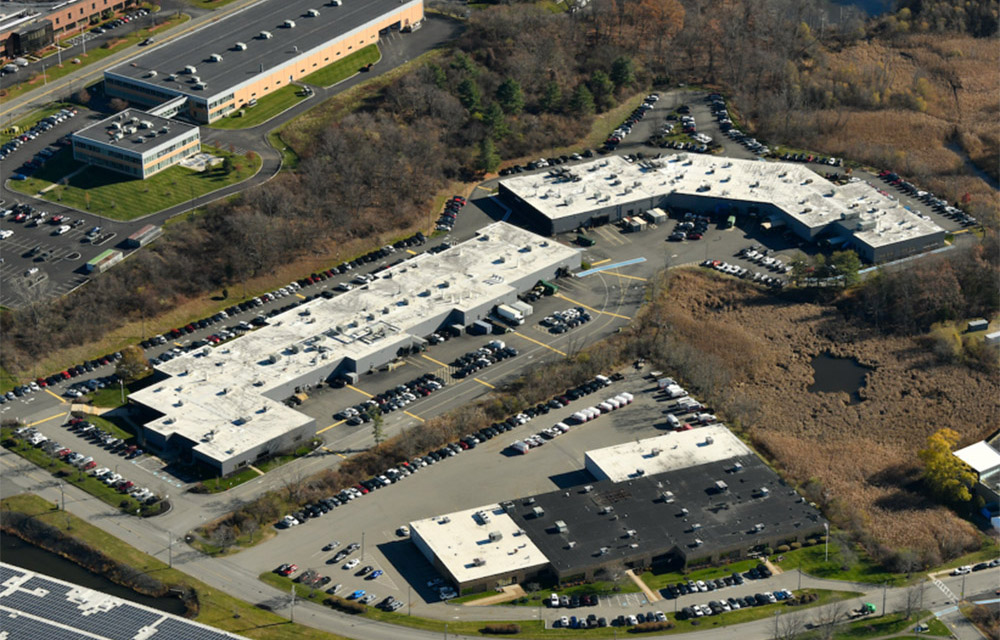
Northwest Bank finances Luzern Associates’ $47.75m acquisition
Danvers, MA Northwest Bank provided $34.5 million in financing to support Luzern Associates LLC’s $47.75 million acquisition of the Cherry Hill industrial portfolio, a three-building campus totaling 200,000 s/f.




 (1).gif)



Columns and Thought Leadership

The focus on price per s/f compared to the comparable sales used in the appraisal report - by Dennis Chanski
Over the past several weeks, I have completed appraisal assignments for private clients. Interestingly, after submitting these appraisals, I received several phone calls – not to question the value, content, or any incorrect information, but rather to discuss the price per s/f compared to the comparable sales used in the report.

Are appraisers on the same page as the assessor? - by Richard Seman
The purpose of this article is to address problematic or confusing issues which may help assessors and appraisers to better understand how to value real estate for tax assessment purposes.

Reverse exchanges and the challenges of a competitive real estate market - by Michele Fitzpatrick
Our current, highly competitive real estate market poses specific challenges for investors who are considering taking advantage of a tax-deferred 1031 exchange. In this market, investors will have no problem selling their current property if priced properly, but they may find it difficult to find a suitable replacement property

Massachusetts real estate transfers over $1 million face new tax rules as of November 1st - by Daniel Meyer
Attention to owners of real estate in the Commonwealth (and the title companies and other professionals who advise them), the Massachusetts Department of Revenue (the “DOR”) recently adopted a new “millionaire’s tax” via 830 CMR 62B.2.4
