


 (1).gif)
News:
Finance
Posted: August 13, 2021
Rockland Trust leads financing of $61m to POAH for Salem Heights
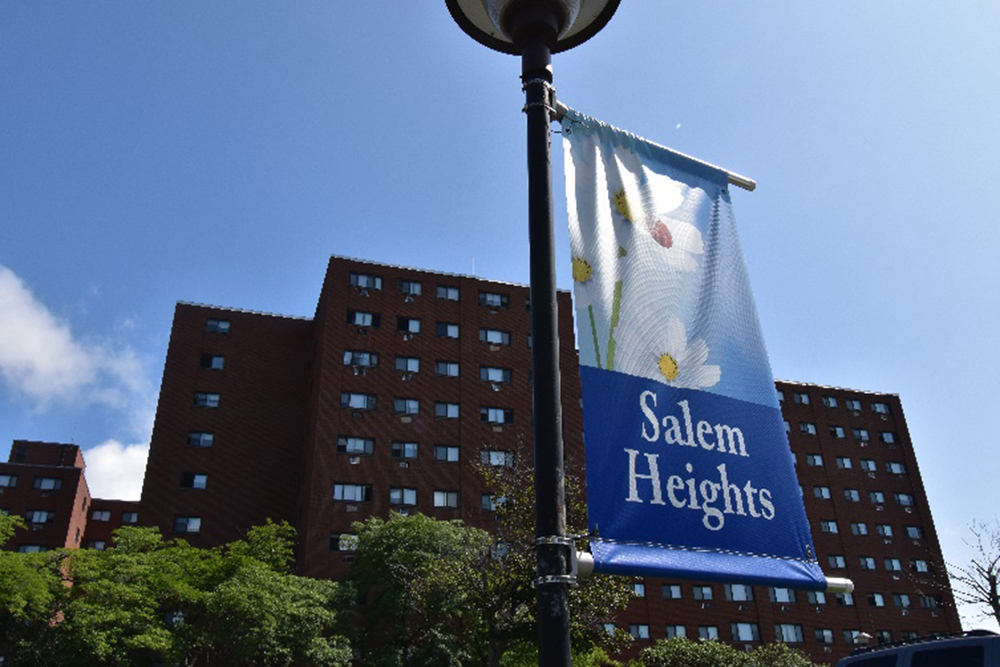
Salem, MA Rockland Trust led a financing package of $61 million to Preservation of Affordable Housing (POAH) for the redevelopment of their affordable housing apartment building, Salem Heights. The project will consist of substantial renovations to the low-income residential property comprising 281 rental units across the property’s two-building high-rise campus. Salem Heights was modestly renovated in 2003 when POAH acquired the property.
“Rockland Trust is honored to partner with Preservation of Affordable Housing,” said Heidi Yates, vice president of commercial lending at Rockland Trust. “This transaction reflects the bank’s commitment to local communities, not only by providing the funds to redevelop affordable housing units, but also by supporting POAH’s mission of preserving and sustaining affordable, healthy homes for all.”
Rockland Trust provided a $22.6 million construction loan of the total $61 million financing package. Eastern Bank and East Boston Savings Bank were also participants in the transaction.
In addition to the construction loan, Rockland Trust will purchase Federal Low Income Housing Tax Credits and partner with Boston Financial Investment Management (BFIM) to provide tax credit equity to help fund POAH’s acquisition and renovation. Eastern Bank, East Boston Savings Bank, and Peoples Bank are also partnering to purchase the federal tax credits.
“We are excited about the renovations kicking off at Salem Heights this month and are grateful to local partners, Rockland Trust, Eastern Bank, East Boston Savings Bank, People’s Bank, and Boston Financial, for providing debt and equity financing that will help us substantially upgrade this important affordable housing community that more than 400 residents call home,” said Dena Xifaras, POAH Senior Vice President, Ownership and Operations.
Located at 12 Pope St., Salem Heights Apartments offers residents access to on-site parking and nearby parks, hospitals, businesses, and is near bus and train transit. Over 96% of the units will be affordable to households earning less than 60% of the area median income (AMI), with 44 units further restricted for very low-income households earning less than 50% of AMI, and 28 units further restricted for extremely low-income households earning less than 30% AMI.
Tags:
Finance
MORE FROM Finance
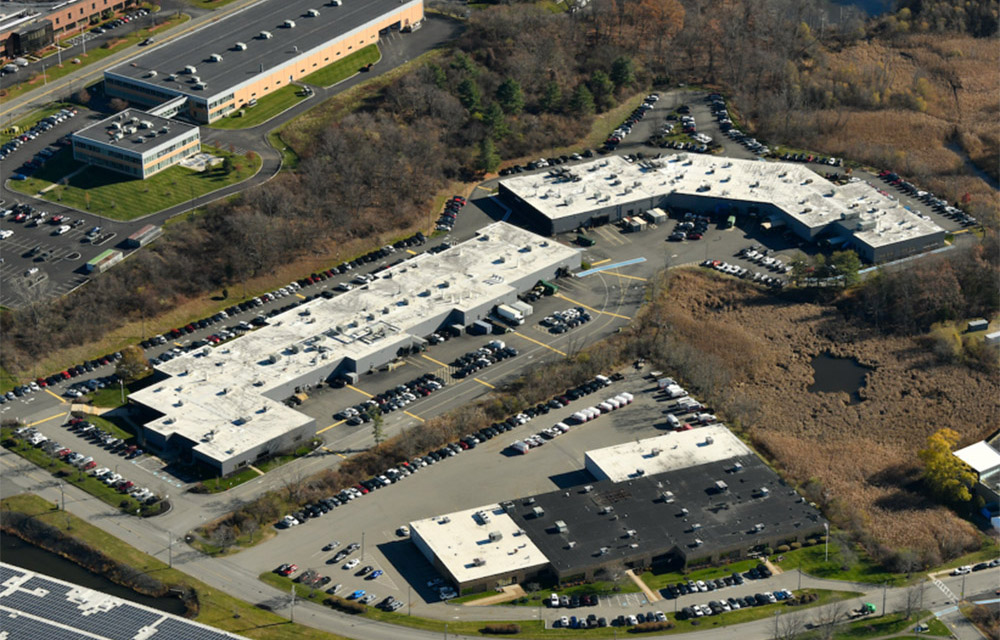
Northwest Bank finances Luzern Associates’ $47.75m acquisition
Danvers, MA Northwest Bank provided $34.5 million in financing to support Luzern Associates LLC’s $47.75 million acquisition of the Cherry Hill industrial portfolio, a three-building campus totaling 200,000 s/f.

 (1).gif)


Quick Hits


Columns and Thought Leadership

The focus on price per s/f compared to the comparable sales used in the appraisal report - by Dennis Chanski
Over the past several weeks, I have completed appraisal assignments for private clients. Interestingly, after submitting these appraisals, I received several phone calls – not to question the value, content, or any incorrect information, but rather to discuss the price per s/f compared to the comparable sales used in the report.

Reverse exchanges and the challenges of a competitive real estate market - by Michele Fitzpatrick
Our current, highly competitive real estate market poses specific challenges for investors who are considering taking advantage of a tax-deferred 1031 exchange. In this market, investors will have no problem selling their current property if priced properly, but they may find it difficult to find a suitable replacement property

Massachusetts real estate transfers over $1 million face new tax rules as of November 1st - by Daniel Meyer
Attention to owners of real estate in the Commonwealth (and the title companies and other professionals who advise them), the Massachusetts Department of Revenue (the “DOR”) recently adopted a new “millionaire’s tax” via 830 CMR 62B.2.4

Are appraisers on the same page as the assessor? - by Richard Seman
The purpose of this article is to address problematic or confusing issues which may help assessors and appraisers to better understand how to value real estate for tax assessment purposes.
