


 (1).png)
News:
Owners Developers & Managers
Posted: July 17, 2026
Southern New Hampshire continues to write its growth story - by Michael Harrington

Southern New Hampshire’s commercial real estate market continues to demonstrate resilience, adaptability, and long-term growth potential. While national markets continue to navigate economic uncertainty, higher borrowing costs, and evolving workplace trends, the Southern N.H. region has distinguished itself through strategic planning, infrastructure investment, and a collaborative approach to economic development.
Once known primarily as a collection of bedroom communities serving Greater Boston, the region has evolved into a destination market attracting employers, developers, investors, and new residents alike. The transformation has been driven by three key factors: productive partnerships between municipalities and the private sector, sustained investment in transportation and utility infrastructure, and a willingness by local communities to modernize land use regulations to accommodate changing market demands. These advantages continue to support transformative projects such as Tuscan Village in Salem, Woodmont Commons in Londonderry, Market & Main in Bedford, and now Technology Hill in Londonderry.
One of Southern N.H.’s greatest strengths remains the productive relationship between developers and municipal leaders. Communities throughout the region recognize that thoughtful growth creates jobs, expands housing opportunities, strengthens municipal tax bases, and improves quality of life. Early collaboration between developers, planning departments, and economic development offices has become a hallmark of successful projects and has helped streamline approvals while preserving community character.
Infrastructure investment continues to provide the foundation for economic expansion. The widening of I-93 and the ongoing widening of Rte. 3 have transformed regional mobility between Salem and Nashua to Manchester and opened new opportunities for commercial investment along the corridor. Communities have complemented these transportation improvements with strategic investments in municipal water and sewer infrastructure, enabling higher-density development and mixed-use projects that would have been difficult to achieve only a decade ago.
Few developments illustrate this transformation better than Tuscan Village in Salem. The redevelopment of the former Rockingham Park site into a vibrant mixed-use destination continues to redefine what is possible in N.H. The project now includes residential units, office space, hospitality uses, medical facilities, restaurants, and retail destinations, creating a true live-work-play environment and serving as a model for future mixed-use communities throughout the region.
Market & Main in Bedford represents another example of the region’s forward-thinking approach. Bedford’s willingness to create a Performance Zone overlay transformed a former department store location into a vibrant mixed-use center combining retail, dining, and the potential for future residential uses. The success of the project has reshaped Bedford’s commercial corridor and reinforced the value of flexible zoning and creative redevelopment strategies.
Londonderry continues to emerge as one of Southern N.H.’s most active development markets. In addition to the continued buildout of Woodmont Commons, the newly emerging Technology Hill development demonstrates how communities are embracing the next generation of mixed-use planning. The project combines industrial, residential, retail, childcare, and community amenities within a thoughtfully designed campus environment intended to support both employers and residents. Plans include more than 350,000 s/f of industrial and commercial space, 440 residential units, and supporting neighborhood services, creating another example of Southern N.H.’s ability to integrate economic development with quality of life improvements.
Communities throughout Southern N.H. have also demonstrated remarkable flexibility in adapting zoning regulations to meet changing market conditions. The demand for housing remains strong, and municipalities increasingly recognize the importance of encouraging a broader range of housing options to support employers and attract workforce talent.
The City of Manchester’s comprehensive update of its land use regulations reflects this forward-thinking approach. By modernizing decades-old ordinances and encouraging redevelopment and adaptive reuse, the city is positioning itself for the next generation of investment while preserving the character that makes Manchester the economic center of N.H.
Commercial real estate fundamentals across Southern N.H. remain healthy entering the second half of 2026. Demand for industrial space continues to be driven by advanced manufacturing, logistics, technology companies, contractor bays, and flex users, while well-located Class A office properties have stabilized as tenants increasingly prioritize quality, amenities, and accessibility. The office sector is also benefiting from creative adaptive reuse projects that convert obsolete inventory into residential and mixed-use developments.
Together, projects such as Tuscan Village, Woodmont Commons, Market & Main, and Technology Hill provide compelling evidence of what can be accomplished when infrastructure investment, municipal cooperation, and zoning flexibility align. These developments have created jobs, expanded housing opportunities, strengthened municipal finances, and enhanced quality of life throughout the region.
Southern N.H. enters the second half of the decade with significant advantages: a strategic location within the Boston metropolitan economy, excellent transportation infrastructure, a highly educated workforce, and communities willing to embrace thoughtful growth. The region is no longer simply benefiting from proximity to Boston — it has become an economic destination in its own right.
Michael Harrington, CRE, CCIM, RPA, is a principal of Harrington & Co., Manchester, N.H.
MORE FROM Owners Developers & Managers
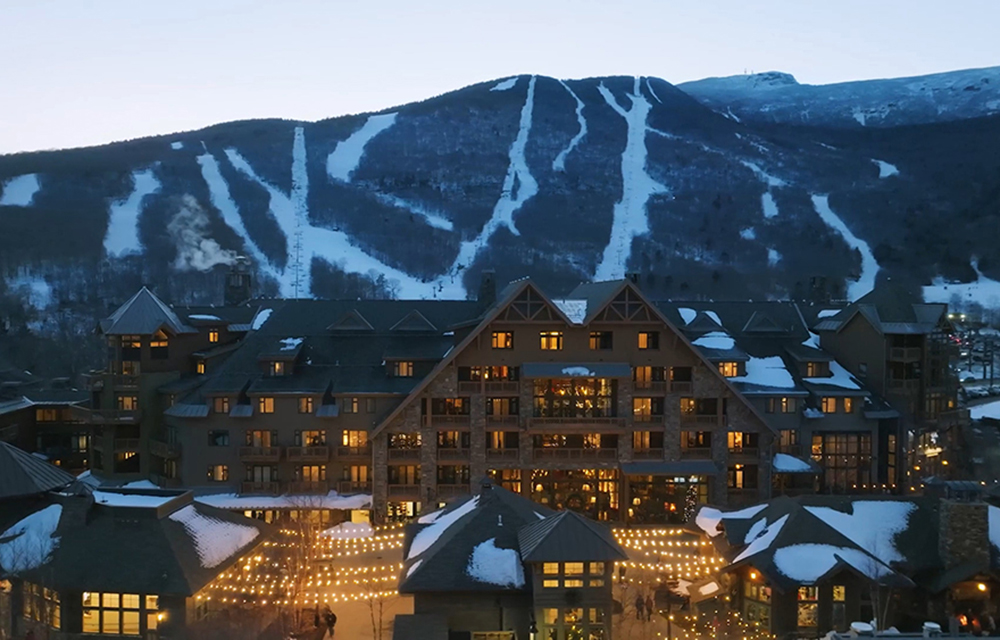
The Lodge at Spruce Peak recognized with Condé Nast Traveler’s 2026 Readers’ Choice Award - #3 in New England
Stowe, VT Condé Nast Traveler revealed the results of its annual Readers’ Choice Awards, with The Lodge at Spruce Peak recognized as the #3 U.S. Resort in New England.




 (1).png)

Columns and Thought Leadership

Retail infill strategy to activate Pawtucket’s Conant Thread District - by Gaetan Kashala
Until recently, the Conant Thread District consisted of approximately 150 acres of underutilized industrial land spanning Pawtucket and Central Falls. Today, the area is one of the most significant

The legislature has spoken: New Hampshire doubles down on housing in commercial zones - by John Sokul
Last year, the New Hampshire Legislature enacted HB 631, a landmark housing measure requiring municipalities to permit multifamily housing in commercially zoned districts. The law generated

Revitalized Town Centers: Retail??? - by Carol Todreas
It is now widely accepted that customers want to shop in person at physical stores. Brands know that they do better business in a physical store than just on line so they want to open stores. Demand for retail space by digital merchants, local entrepreneurs, and newly developed national chains

IREM president’s message: Our new reality - Staying ahead of supply chain delays - by Yoany Vargas
Supply chain delays are slowing construction, ratcheting up operating costs, and extending turnover timelines across Greater Boston, directly reducing revenue and increasing the workload for multifamily and