(1).png)
News:
Owners Developers & Managers
Posted: May 13, 2009
The art of numbers
In trying to determine the replacement cost of one's home typically one thinks of market value and conditions. When the real estate market is up, customers are under the impression that they need to increase their dwelling limit, and the opposite when the market is down. We often receive inquiries from mortgage brokers or real estate brokers requesting homeowner's insurance based on the "selling price." For an agent, it's a never ending battle with mortgage and real estate brokers. Market value is the price paid for your house including land. The replacement cost is the price or cost it will take to rebuild, same quality, at today's cost.
These two numbers are very much different. Insurance companies use a formula to calculate the appropriate 100% replacement cost value. This will ensure the ability to rebuild the entire house in the event of a total loss.
Modifying or adding an addition to a home or changing building codes may drastically alter the Replacement Cost value, which is why it's so important that a customer communicate periodically with their insurance agent.
With the current depressed economy, customers are looking at ways to save money and therefore requesting decreasing the replacement cost limit or eliminating coverages completely on their homeowners policies. This is a dangerous mistake. The home is one of the biggest purchase a person will make in their lifetime. The majority of one's assets are secured in a home, and in some cases the only lifetime savings they will have for their retirement. The peace of mind of having the proper insurance in place is worth much more than the few dollars one will save over the years.
Connie Oliviero is president of Marvin Kaplan Insurance Agency, Inc., Boston, Mass.
MORE FROM Owners Developers & Managers
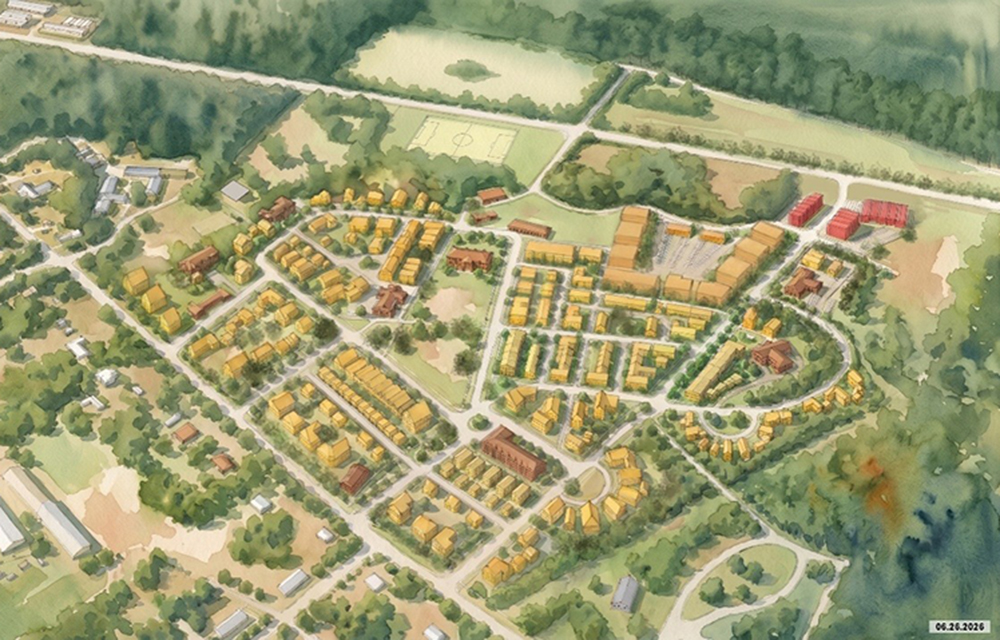
Healey-Driscoll Administration seeks developer to transform former 72-acre school into 288+ home neighborhood
Lancaster, MA According to the Healey-Driscoll Administration, the Division of Capital Asset Management and Maintenance (DCAMM) has released a Request for Proposals seeking a developer to transform the 72-acre former Lancaster Industrial School for Girls property into a new, walkable neighborhood with at least 288 homes.






 (1).png)

Columns and Thought Leadership

The legislature has spoken: New Hampshire doubles down on housing in commercial zones - by John Sokul
Last year, the New Hampshire Legislature enacted HB 631, a landmark housing measure requiring municipalities to permit multifamily housing in commercially zoned districts. The law generated

IREM president’s message: Our new reality - Staying ahead of supply chain delays - by Yoany Vargas
Supply chain delays are slowing construction, ratcheting up operating costs, and extending turnover timelines across Greater Boston, directly reducing revenue and increasing the workload for multifamily and

Retail infill strategy to activate Pawtucket’s Conant Thread District - by Gaetan Kashala
Until recently, the Conant Thread District consisted of approximately 150 acres of underutilized industrial land spanning Pawtucket and Central Falls. Today, the area is one of the most significant

Revitalized Town Centers: Retail??? - by Carol Todreas
It is now widely accepted that customers want to shop in person at physical stores. Brands know that they do better business in a physical store than just on line so they want to open stores. Demand for retail space by digital merchants, local entrepreneurs, and newly developed national chains
September Promotion