


 (1).gif)
News:
Finance
Posted: June 12, 2008
The proposed Home Valuation Code of Conduct: Part 2
To its credit, the HVCC makes an attempt to address breakdowns in appraisal independence and the agreement makes a start toward establishing a more independent appraisal process, something which is absolutely essential to sound lending and the health of the financial system. Developing greater uniformity for all parties in mortgage transactions and having the parties play under the same set of rules is laudable. The disparate, deregulated, uncontrolled nature of the business has created many of today's problems and the GSEs have been as guilty of promoting this environment and its consequences as any other involved party.
The proposed HVCC agreement's attempt to reduce appraisal coercion is a long overdue initiative. The creation of a hotline under the aegis of a proposed Independent Valuation Protection Institute (IVPI) to handle complaints on appraisal independence is a strong step in the right direction and eliminates the difficulty many have had in pursing relief on this issue.
We all know that the residential appraisal process, in particular, has been flawed for many years. It's curious to me that it takes the threat by an investigatory entity with prosecutorial powers of starting to "turn over the rocks" of GSEs and their regulator for them to hastily enter into an agreement to save them from further scrutiny (in the short term) and essentially sells out the appraisers - the least empowered of mortgage industry interest groups! It makes one wonder about the motivation behind the proposed changes and for whose benefit they were ultimately created.
We only need to look to FIRREA and its mandates as carried out by Federal banking agencies and their supervised institutions to understand that independence of the appraisal function can be made to work where there are mechanisms for accountability as part of the regulatory structure. There are many institutions out there that function well day to day, minding their own business, making intelligent, reasonable lending decisions based on competent and ethical appraisals, which do not need or want Appraisal Management Companies as part of their team! Further, there are many institutions who survive and thrive based on the efforts of their in house staff and who want to be in control of appraisers. It's hard to understand what the AMCs bring to the table except the potential to make more money from appraisers (and from consumers, who are often not aware of the "cut" taken by AMC as part of the appraisal fee).
Let's get some solutions in place to help solve the appraisal and mortgage abuses. The proposed agreement does not go far enough in solving the problems and creates more problems. Most observers do not believe the residential appraisal process is useless: most believe it is deeply flawed due to the dysfunctional structure of the mortgage lending industry due to deregulation, non-regulation, and simple greed and avarice. The structure of industry has promoted and rewarded unethical and incompetent behavior, squeezing out those who are ethical and competent. The mortgage industry needs a solution to appraiser independence - this agreement moves to further hamstring the residential appraiser, and putting into place the steps to further marginalize competent appraisers from the home loan process with the end result of eliminating them from having any meaningful input into the process. The agreement concerns appraisers but has not addressed many concerns that thoughtful appraisers would have in the crafting of this agreement which, while affecting appraisers, seems to have had little meaningful appraiser input.
We have a problem here. We have several problems here. Is Houston listening?
If you are a residential appraiser, you are about to be affected by these changes. If you are an ethical and competent residential appraiser, you should worry if the bulk of your business is from lending transaction.
If you are a commercial appraiser doing work for financial institutions, you should take heed. You may be next. This agreement has far-reaching repercussions.
Make your voice heard. Have an opinion: go onto the website of Fannie Mae and Freddie Mac and provide your own response to these changes which have the potential to radically alter the appraisal profession in a heartbeat. A very short comment period was provided: don't delay.
William Pastuszek, Jr., MAI, MRA is the principal of Shepherd Associates, Newton Mass.
MORE FROM Finance
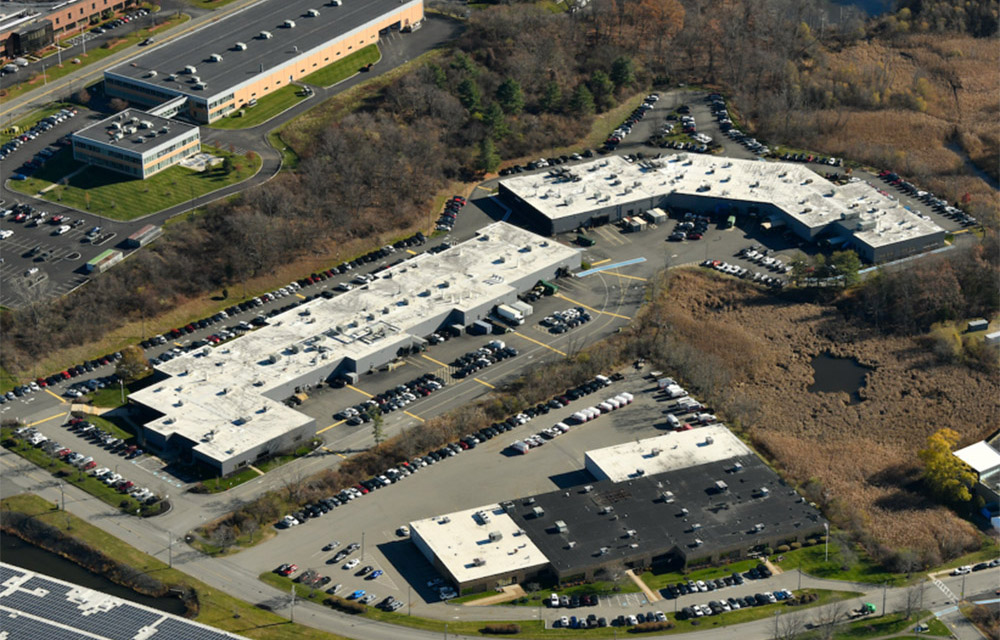
Northwest Bank finances Luzern Associates’ $47.75m acquisition
Danvers, MA Northwest Bank provided $34.5 million in financing to support Luzern Associates LLC’s $47.75 million acquisition of the Cherry Hill industrial portfolio, a three-building campus totaling 200,000 s/f.




 (1).gif)



.png)
Columns and Thought Leadership

Reverse exchanges and the challenges of a competitive real estate market - by Michele Fitzpatrick
Our current, highly competitive real estate market poses specific challenges for investors who are considering taking advantage of a tax-deferred 1031 exchange. In this market, investors will have no problem selling their current property if priced properly, but they may find it difficult to find a suitable replacement property

Are appraisers on the same page as the assessor? - by Richard Seman
The purpose of this article is to address problematic or confusing issues which may help assessors and appraisers to better understand how to value real estate for tax assessment purposes.

The focus on price per s/f compared to the comparable sales used in the appraisal report - by Dennis Chanski
Over the past several weeks, I have completed appraisal assignments for private clients. Interestingly, after submitting these appraisals, I received several phone calls – not to question the value, content, or any incorrect information, but rather to discuss the price per s/f compared to the comparable sales used in the report.

Massachusetts real estate transfers over $1 million face new tax rules as of November 1st - by Daniel Meyer
Attention to owners of real estate in the Commonwealth (and the title companies and other professionals who advise them), the Massachusetts Department of Revenue (the “DOR”) recently adopted a new “millionaire’s tax” via 830 CMR 62B.2.4
