



News:
Brokerage
Posted: May 21, 2008
U.S. retail chain stores are slowing down but not stopping store expansion
Many U.S. chains are coping with today's uncertain economy by putting the brakes on store expansion plans. In recent months, retailers ranging from Lane Bryant to Rite Aid have had store closings. Yet not every retailer shows signs yet of cutting back, or even drastically slowing down growth. "Some stores seem to be planning to 'grow through' the slowdown, or even the recession, if it comes to that," said James McComb, president of McComb Group, a Minneapolis-based retail consultancy. "The thinking is that slowdown isn't going to last forever, or even that long in terms of corporate planning. They want to be in place to take advantage of the next upturn, because they have confidence in the business cycle."
Best Buy is one example of a retailer "that still has momentum," says Nick McCoy, senior consultant with Columbus, Ohio-based TNS Retail Forward and a specialist in furniture and home furnishings retail. "Wal-Mart isn't as aggressive as they traditionally have been when it comes to openings, but there doesn't seem to be much change in Target's growth trajectory," he said. In fact, Target made a point of holding the grand openings of 26 of new stores on the same day this March.
"Most of the very large chains, provided they have access to capital, are going to continue their growth strategies in some form," he said. "Whether or not that mixes with closure of underperforming assets is going to be on a case-by-case basis, and may not even depend on the economy. Some locations need to be closed regardless of the economy."
Retailers are also beginning to employ marketing and merchandising strategies attuned to a sour economy and a worried consumer mindset. "Home Depot is a good example of that, and they were doing so even before the housing slump," said McComb. Under a previous CEO, the company famously focused on expansion at the expense of certain in-store amenities, such as customer service. The current chairman and CEO Frank Blake has reversed that emphasis, and is trying to woo lost customers back with customer service improvements.
A good many retailers are also trying to capitalize on the federal tax rebates that started being sent in early May. Some, such as Wal-Mart, are aggressively publicizing their price reductions, though that's not a new activity for the retail giant.
Other retailers are taking a more novel tack. When a consumer uses his or her rebate check to buy a gift card at a Supervalu Inc. or Kroger grocery store, the consumer will get a 10% bonus added to the card.
MORE FROM Brokerage
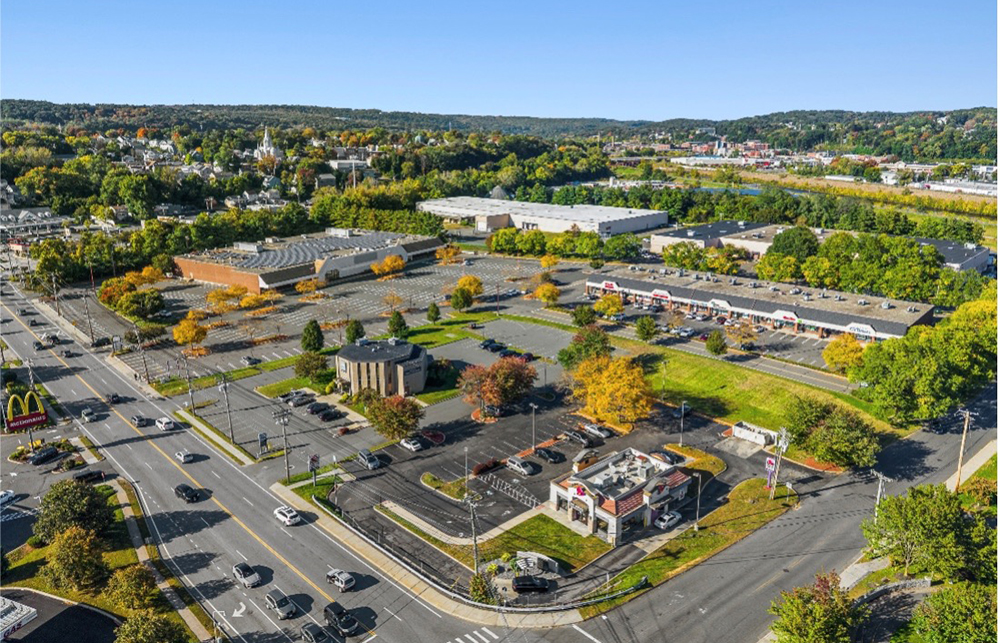
Saugatuck Commercial Real Estate brokers $8.3m sale of Ansonia Landing Shopping Center
Ansonia CT Saugatuck Commercial Real Estate (SCRE) represented Investor Michael Berkowitz in the $8.3 million purchase of Ansonia Landing Shopping Center from a KIMCO-led Partnership. The 91,447 GLA shopping center is located at 100-172 Division St.




Quick Hits

Columns and Thought Leadership

End of the year retail thoughts - by Carol Todreas
Now what? As the year comes to a close, the state of retail is always in the news. The answers vary greatly depending on who in the various related industries you ask, each offering a unique lens on the challenges and opportunities ahead.

The rise of AI in CRE - And what it means for every skilled profession - A broker & appraiser weighs in - by Bryan Plourde
This may seem self-serving, and I’ll be the first to admit it. But unlike some of the artificial intelligence tools now reshaping our industry, I am fully aware of my own bias. So, hear me out. The rise of AI in commercial real estate is not a distant threat or a speculative headline.
