


 (1).gif)
News:
Finance
Posted: April 9, 2015
We eagerly await the actions of the Fed
In March, the Federal Reserve Open Market Committee (FOMC) reported that economic fundamentals continued to improve, albeit at a modest rate, throughout the United States. The fed funds rate target remains at 0%-0.25%, however, the FOMC commentary suggests that the first increase in the fed funds rate since mid-2006 is very near approaching. The FOMC will consider labor market conditions, financial markets, and inflationary pressures during decision making; a distinct policy shift from what has become the traditional recovery benchmark. In the Federal Reserve's Beige Book report in March from the First District (Boston), contacts reported positive outlooks and strong forecasts throughout the marketplace. Cautious optimism continues to be the word of the day.
The February Employment Situation Report released by the US Bureau of Labor Statistics (BLS) provided additional economic ballast as decreases in the national unemployment rate and the number of unemployed persons pushes total nonfarm payroll employment up by 295,000 in February. According to the BLS, increases in food service jobs, professional and business services, construction, healthcare, and transportation and warehousing accounted for the majority of the upward momentum, all of which are good for commercial real estate, both regionally and nationally. The outlook for steadily improving economic and labor conditions appears to be generally optimistic, especially in Boston, where commercial real estate activity continues to push the needle.
With fundamentals improving at economically sustainable rates, the commercial real estate markets have most recently been, and continue to be, cautiously optimistic. As we move closer to the eventuality of an increase in the fed funds rate, precipitated by sufficient economic performance, the reaction of institutional capital and local sources will be one of distinction. As Irish retail giant Primark plans to open its first US store at the Burnham Building in the Fall of 2015, the Commonwealth begins discussing a public referendum on the 2024 Olympic Bid, and the 2015 Boston Marathon approaches, Boston's status as a world-class city is becoming increasing galvanized.
Four months in, 2015 promises to be a year of firsts. The Dow Jones Industrial Average is hovering near all-time historic levels, demand for residential housing in suburban Boston far exceeds supply, and the development pipeline in Boston seems endless. The 2024 Olympic bid has, if nothing else, forced the start of a much-needed and much anticipated conversation about infrastructure, capacity, utility, and what's next for the city and for the region. At the heart of that exercise must be a sharp pencil, a firm vision, and the necessary diligence to continue the momentum and economic progress made over the past months and years.
CRE participants are increasingly sophisticated and markets continue to evolve into ever more efficient venues for institutional capital. Macroeconomic trends inform the diligence necessary on a micro-economic, micro-market, and micro-deal basis and are the foundation of sound analysis and decisions. We eagerly await the actions of the Fed, the re-actions of the marketplace, and what's next for New England.
Brett Pelletier is a senior analyst with Kirk & Company, Real Estate Counselors, Boston, Mass.
MORE FROM Finance
Northwest Bank finances Luzern Associates’ $47.75m acquisition
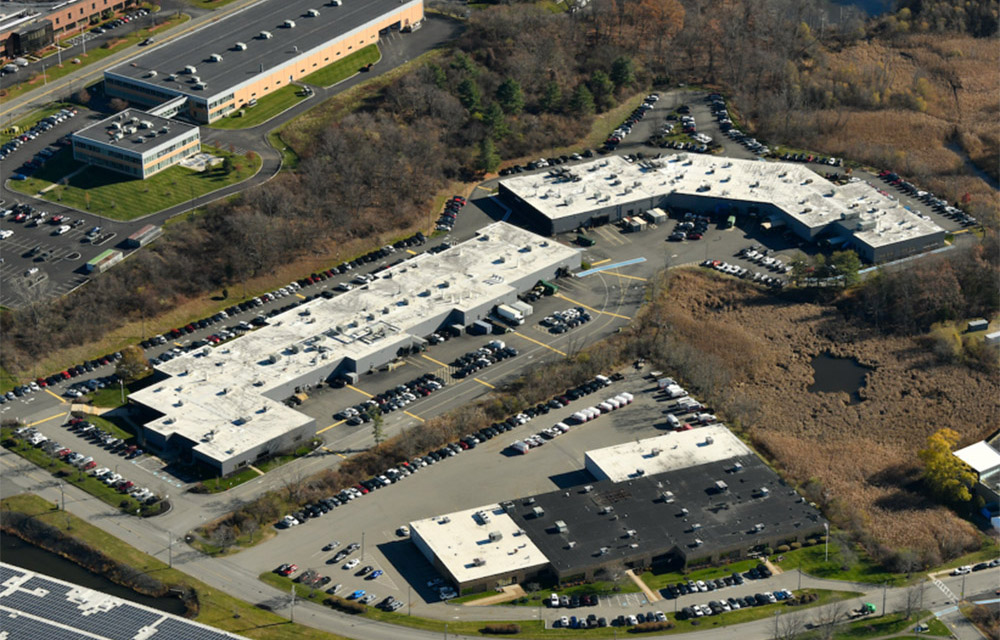
Danvers, MA Northwest Bank provided $34.5 million in financing to support Luzern Associates LLC’s $47.75 million acquisition of the Cherry Hill industrial portfolio, a three-building campus totaling 200,000 s/f.




 (1).gif)


Quick Hits
.png)
Columns and Thought Leadership

Are appraisers on the same page as the assessor? - by Richard Seman
The purpose of this article is to address problematic or confusing issues which may help assessors and appraisers to better understand how to value real estate for tax assessment purposes.

Reverse exchanges and the challenges of a competitive real estate market - by Michele Fitzpatrick
Our current, highly competitive real estate market poses specific challenges for investors who are considering taking advantage of a tax-deferred 1031 exchange. In this market, investors will have no problem selling their current property if priced properly, but they may find it difficult to find a suitable replacement property

Massachusetts real estate transfers over $1 million face new tax rules as of November 1st - by Daniel Meyer
Attention to owners of real estate in the Commonwealth (and the title companies and other professionals who advise them), the Massachusetts Department of Revenue (the “DOR”) recently adopted a new “millionaire’s tax” via 830 CMR 62B.2.4

The focus on price per s/f compared to the comparable sales used in the appraisal report - by Dennis Chanski
Over the past several weeks, I have completed appraisal assignments for private clients. Interestingly, after submitting these appraisals, I received several phone calls – not to question the value, content, or any incorrect information, but rather to discuss the price per s/f compared to the comparable sales used in the report.
