


 (1).gif)
News:
Finance
Posted: March 13, 2020
What’s a residential lot worth and who buys them? - by Brian White

White Appraisal
In the Seacoast area of New Hampshire, similar to many other markets in New England, the prices of single residential lots have dramatically increased over the past several years along with the prices of single family homes. After examining the asking and sale prices of residential lots located in the greater Seacoast area of New Hampshire, I have a few takeaways:
1. Lot values have increased over the past few years at a rate slightly higher than residential home values;
2. As lot prices have gone up for the primary lots, so do they for secondary and tertiary lots;
3. The most likely buyer of a vacant lot today is a builder and not an owner-builder as it was in the past.
Based on recent MLS data, the average sale price in 2019 for parcels located in the Rockingham County area of New Hampshire that contain three acres or less was $211,059. Just four years ago in 2015, the average sale price for similar lots was $157,982. This translates into an average annual lot price increase of 8.4%. This can be compared to the average sale price in 2019 for single family residences located in Rockingham County which was $434,295. Four years ago in 2015, the average sale price for similar single family residences was $355,718. This translates into an average annual lot price increase of 5.52%. Comparing these annual increases, it appears that in Rockingham County, the average lot prices have appreciated at a higher rate than the average home prices. The Portsmouth area can be considered to represent a primary Seacoast area lot as it is one of the most desirable communities in the New Hampshire Seacoast area. While individual vacant lots are limited, there have been a few recent sales of smaller (1/4 AC or less) lots located in older subdivisions in the range of $225,000 to $250,000 per lot. While Portsmouth tends to set the upper end of the range for individual lots in the Seacoast area (without any water amenities), secondary lots, that typically range in size from one to three acres, can be found in the Stratham, Greenland and Exeter area selling from $125,000 to $200,000. The tertiary greater Seacoast area towns of Epping, Raymond and Northwood have benefited from the value increases in towns located to the east. Recent sales of one to three acre lots in these towns range from $40,000 to $125,000 with the bulk of the activity taking place at the upper end of the range.
The buyers of individual residential lots are either builders seeking a lot on which to construct a spec house or a custom-built home or they are individuals, or couples, looking for a residential lot on which they plan to construct a single family residence. Residential brokers will tell you that the typical buyer is not who it used to be. Several decades ago, when the members of the “Greatest Generation” were done winning WWII, many of them came home and sought the American Dream by buying a residential lot and building their own home. Most of the men of this generation had some or all of the construction, plumbing and electrical skills that are required for someone to build their own home.
Fast forward a couple of decades and you had many of the Baby Boomers looking to build their own home just as their parents had done. It was common for Dads of that era to pass down basic construction skills to their children, thus making it possible for them to consider building their own homes.
Now we are at the present day where some of the children of the Boomers (the Millennials) are looking to do the same. Unfortunately, the Boomers were not as successful at passing on trade skills to their children. So evolution has created a change in who is the most likely buyer of a vacant residential lot. Therefore, today the most likely buyer is a builder. This change has likely not impacted the demand for residential lots but it is noteworthy.
So if you are looking for a house lot in the greater Seacoast area of New Hampshire, plan on the price being higher than it was just yesterday and be ready to compete for the desired lot with a builder.
Brian White, MAI, SRA, is the 2020 director with the NH-VT Chapter of the Appraisal Institute and operates White Appraisal, Dover, N.H.
MORE FROM Finance
Northwest Bank finances Luzern Associates’ $47.75m acquisition
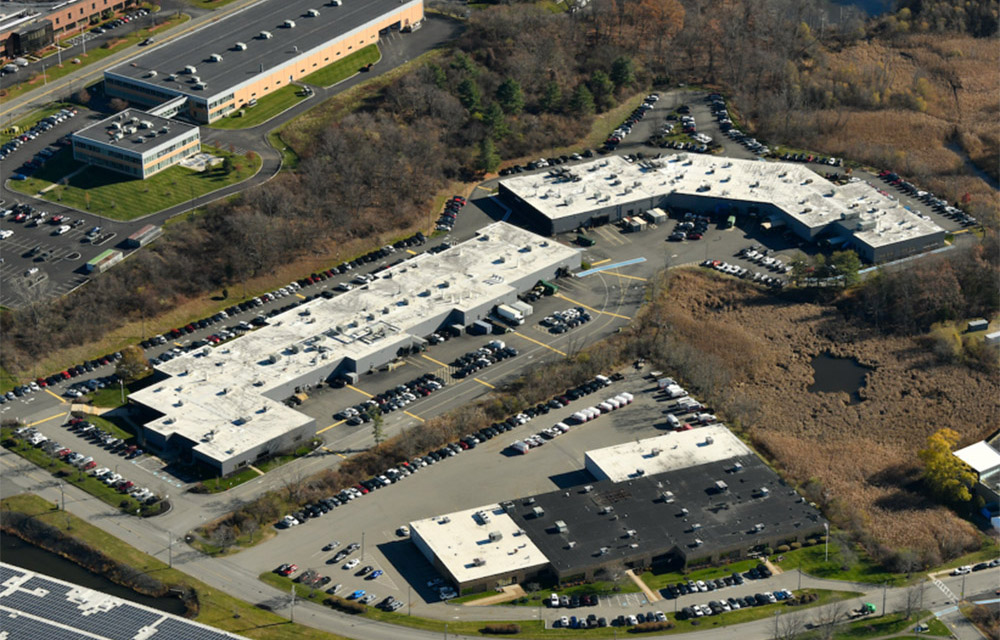
Danvers, MA Northwest Bank provided $34.5 million in financing to support Luzern Associates LLC’s $47.75 million acquisition of the Cherry Hill industrial portfolio, a three-building campus totaling 200,000 s/f.
 (1).gif)



.png)
Columns and Thought Leadership

Are appraisers on the same page as the assessor? - by Richard Seman
The purpose of this article is to address problematic or confusing issues which may help assessors and appraisers to better understand how to value real estate for tax assessment purposes.

Reverse exchanges and the challenges of a competitive real estate market - by Michele Fitzpatrick
Our current, highly competitive real estate market poses specific challenges for investors who are considering taking advantage of a tax-deferred 1031 exchange. In this market, investors will have no problem selling their current property if priced properly, but they may find it difficult to find a suitable replacement property

The focus on price per s/f compared to the comparable sales used in the appraisal report - by Dennis Chanski
Over the past several weeks, I have completed appraisal assignments for private clients. Interestingly, after submitting these appraisals, I received several phone calls – not to question the value, content, or any incorrect information, but rather to discuss the price per s/f compared to the comparable sales used in the report.

Massachusetts real estate transfers over $1 million face new tax rules as of November 1st - by Daniel Meyer
Attention to owners of real estate in the Commonwealth (and the title companies and other professionals who advise them), the Massachusetts Department of Revenue (the “DOR”) recently adopted a new “millionaire’s tax” via 830 CMR 62B.2.4
