


 (1).gif)
News:
Finance
Posted: January 8, 2016
Why is there an appraiser shortage? - by Shaun Fitzgerald
 Fitzgerald Appraisals" width="144" height="180" /> Shaun Fitzgerald, Fitzgerald Appraisals
A friend told me last week that when he became an appraiser at the age of 22, the average age of all appraisers was 27. Now he’s in his mid-sixties and the average age of all appraisers has risen to 62. That’s amazing.
It’s not that everyone entered the profession over forty years ago and just stayed there. Certainly some have joined and some have left. The number of people in the profession has actually increased over those forty years. What has happened, though, is that many younger people have entered, but not so many have stayed.
Many of the appraisal assignments come from lenders. Seems like every year there are fewer and fewer of them – lenders, that is. Those fewer lenders get larger and larger and seem to have more and more money to lend. And, more people to lend it to. So that has created more appraisal assignments. People who were already in the profession got more and more assignments; that made it easy to stay in the profession. But the lenders began to feel that the appraisal report – especially the standardized forms required by Fannie and Freddy – had become pretty much of a commodity. Appraisers who had invested years in education and experience found it boring. More importantly, they found it less and less lucrative.
Filling out form after form then became the domain of the younger, less experienced appraiser. Next appraisal management companies (AMCs) got between the appraiser and the lender and started taking a portion of the fees. Speed and lower fees became all important. But lower fees were not the domain of the experienced appraiser. Fortunately, the experienced appraiser could – and did - teach new people the mechanics of the appraisal business. But then, the lenders started insisting that no appraisal assignments could be completed by trainees. At the same time though, the education and experience requirements developed by the Appraisal Qualifications Board became more rigorous. Entering the profession now requires a college degree plus the equivalent of another college degree of appraisal related education and experience. Unfortunately, anyone graduating from college these days is probably loaded down with debt, and therefore needs a lucrative job to pay off college loans.
Fortunately, significant technological improvements to the appraisal development and reporting process make it much easier to quickly produce Fannie and Freddy reports. There are computer programs that will populate the forms. There are computer programs that will run multiple linear regression analysis on thousands of appraisal reports and suggest the appropriate dollar amounts for each adjustment. There are offshore businesses that will conduct a “desk review” overnight. There are even online systems that will provide an “estimate of value.” So, less and less work needs to be done by the appraiser. Just show up at the property and take a bunch of photos.
Lately, the number of appraisers has been declining. Hard to make a living in any profession where you have to compete with a computer program–or a number of them. On the other hand, someone who has spent a number of years collecting data, verifying information and applying judgement to the massive amounts of data available online might continue to have something to do for a long, long time. Young people are not entering the profession because they can’t make a living at it. Some of the old-timers are running out of gas and leaving the profession. Many are pursuing appraisal assignments that are more interesting and more lucrative in non-lending environments. Hopefully, the computer systems that are currently supplementing the appraiser’s process get so good that they can actually provide judgement. If not, let’s hope that the users of appraisal reports see the value in good practice and reasonable judgement – before there are no appraisers left.
Shaun Fitzgerald is the owner of Fitzgerald Appraisals, Easton Mass.
MORE FROM Finance
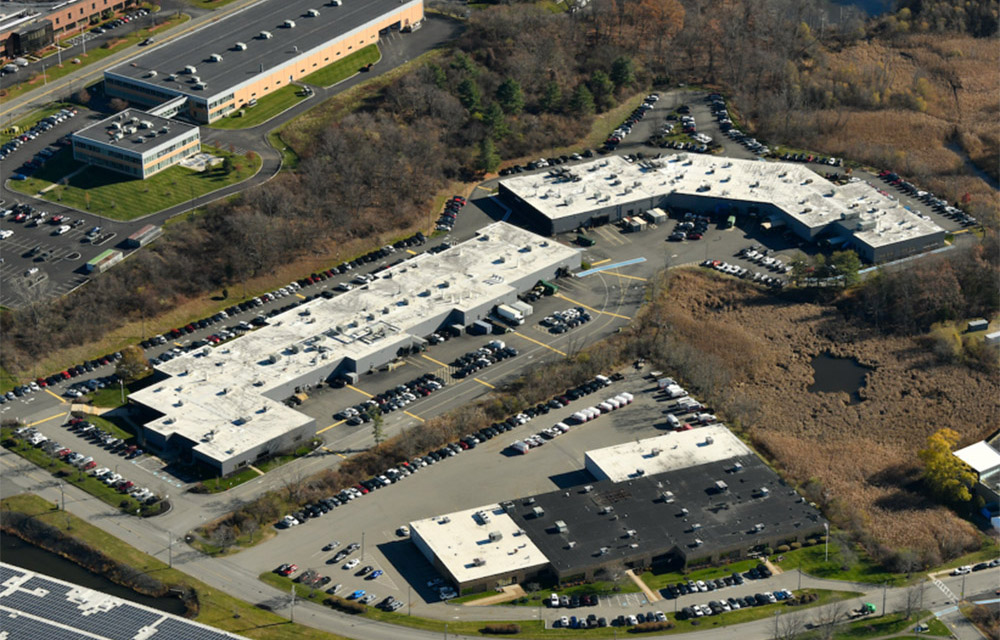
Northwest Bank finances Luzern Associates’ $47.75m acquisition
Danvers, MA Northwest Bank provided $34.5 million in financing to support Luzern Associates LLC’s $47.75 million acquisition of the Cherry Hill industrial portfolio, a three-building campus totaling 200,000 s/f.




 (1).gif)


Quick Hits

Columns and Thought Leadership

Reverse exchanges and the challenges of a competitive real estate market - by Michele Fitzpatrick
Our current, highly competitive real estate market poses specific challenges for investors who are considering taking advantage of a tax-deferred 1031 exchange. In this market, investors will have no problem selling their current property if priced properly, but they may find it difficult to find a suitable replacement property

The focus on price per s/f compared to the comparable sales used in the appraisal report - by Dennis Chanski
Over the past several weeks, I have completed appraisal assignments for private clients. Interestingly, after submitting these appraisals, I received several phone calls – not to question the value, content, or any incorrect information, but rather to discuss the price per s/f compared to the comparable sales used in the report.

Massachusetts real estate transfers over $1 million face new tax rules as of November 1st - by Daniel Meyer
Attention to owners of real estate in the Commonwealth (and the title companies and other professionals who advise them), the Massachusetts Department of Revenue (the “DOR”) recently adopted a new “millionaire’s tax” via 830 CMR 62B.2.4

Are appraisers on the same page as the assessor? - by Richard Seman
The purpose of this article is to address problematic or confusing issues which may help assessors and appraisers to better understand how to value real estate for tax assessment purposes.
