



News:
Brokerage
Posted: April 26, 2012
WS Development launches phase II at Chestnut Hill Shopping Center
WS Development recently hosted the ceremonial first crane strikes to demolish the 120,000 s/f former Macy's building, which previously had been home to Bloomingdale's and R.H. Stearns at Chestnut Hill Shopping Center. In its place will stand a new 115,000 s/f building that will include a 31,000 s/f Sports Club/LA Health and Fitness complex. In addition, National Amusements, Inc., a world leader in the motion picture exhibition industry, is working closely with WS Development in developing a new cinema complex that will involve state of the art dine-in, deluxe theatres as well as a restaurant facility utilizing over 40,000 s/f of the former retail space.
The demolition ushers in Phase II of a major redevelopment at the center. The redevelopment will feature a new village-like streetscape with tree-shaded pedestrian walkways, outdoor dining, cafes and new buildings with glass facades overlooking Hammond Pond. For the first time, storefronts will open to both the south facing Rte. 9 as well as to the north facing Hammond Pond. The architect is PCA (Prellwitz/Chilinski Associates) of Cambridge, which previously designed WS Development's Legacy Place in Dedham.
Later this year, construction will begin on Phase III which will include a new 64,000 s/f three-story building located on the site that is currently occupied by City Sports and Century Bank. The first floor of the new LEED certifiable building will include retail stores and restaurants. The second floor will offer restaurants overlooking Hammond Pond. Part of the second floor and the entire third floor will become WS Development's new corporate headquarters. The existing movie theater will be rebuilt to accommodate a mix of additional best-in-class retailers and restaurants.
MORE FROM Brokerage
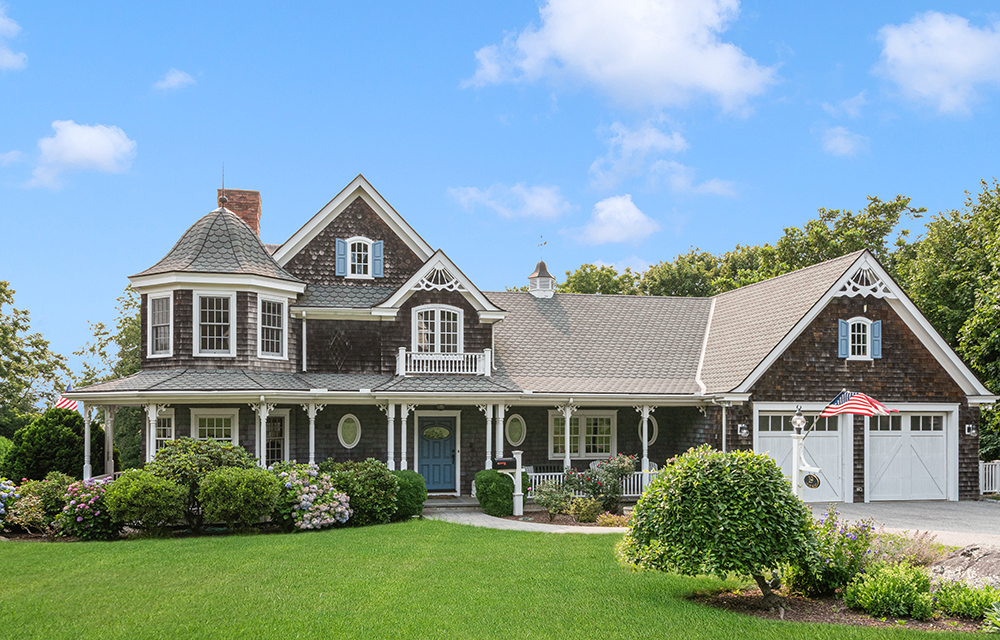
Greene of Compass Providence closes on 19 Ledge Rd. for $2.8 million
Bristol, RI Compass negotiated the sale of 19 Ledge Rd. for $2.8 million. Kira Greene, founding agent of Compass Providence, represented the sellers in this transaction, working alongside Beth Anderson, client




Quick Hits
.png)
Columns and Thought Leadership

End of the year retail thoughts - by Carol Todreas
Now what? As the year comes to a close, the state of retail is always in the news. The answers vary greatly depending on who in the various related industries you ask, each offering a unique lens on the challenges and opportunities ahead.

The rise of AI in CRE - And what it means for every skilled profession - A broker & appraiser weighs in - by Bryan Plourde
This may seem self-serving, and I’ll be the first to admit it. But unlike some of the artificial intelligence tools now reshaping our industry, I am fully aware of my own bias. So, hear me out. The rise of AI in commercial real estate is not a distant threat or a speculative headline.