


 (1).png)
News:
Owners Developers & Managers
Posted: January 29, 2015
An overview of real estate tax abatements
In Massachusetts, the fiscal year begins on July 1 and ends on June 30. The tax date is the preceding January 1. We are now in fiscal 2015. The fiscal year began on July 1, 2014, and it will end on June 30, 2015. The tax date was January 1, 2014. This means that the fair cash value of the property on January 1, 2014, is the standard that the local assessors must meet. In the event a property owner believes that the assessors have failed to meet this standard, the property owner should file an application for abatement with the local board of assessors. In most cities and towns, the deadline for filing is the beginning of February. I would advise any property owner of residential or commercial property who believes his property has been over valued to file. There is no filing fee. You do not need a lawyer in order to file.
A taxpayer must file a separate application for abatement with the local assessors each year. Even though you filed for fiscal 2014, you still have to file an application for fiscal 2015 if you want to be able to obtain an abatement for fiscal 2015 as well as for fiscal 2014.
A taxpayer initially should file an application for abatement with the Board of Assessors. A taxpayer not happy with the Board of Assessors' refusal to grant a tax abatement on a parcel of real estate may take an appeal to the Appellate Tax Board (ATB).
However, pursuant to Section 64 of Chapter 59 of the Massachusetts General Laws, the petition must be filed within three (3) months after the date of the decision of the Board of Assessors or within three (3) months after the date the application is deemed denied.
Whenever the Board of Assessors fails to act within three (3) months from the date of filing the application for abatement, the application shall be deemed to be denied.
Often a property owner who has a good case for an abatement fails to file the appeal on time. The time requirements are jurisdictional. Failure to comply with the time requirements will mean that the ATB must dismiss the appeal.
Most applications for abatement are filed by February 1. Quite often, the Board of Assessors issues a denial in March. Therefore, April, May, and June are the months when many appeals are filed with the ATB.
It is obviously very unfortunate if a property owner is prevented from getting tax relief because he failed to appeal to the ATB on time.
Saul Feldman is a real estate attorney with Feldman Law Office, Boston, Mass.
MORE FROM Owners Developers & Managers
Rubin Rudman to establish headquarters at Tishman Speyer’s One Federal St.
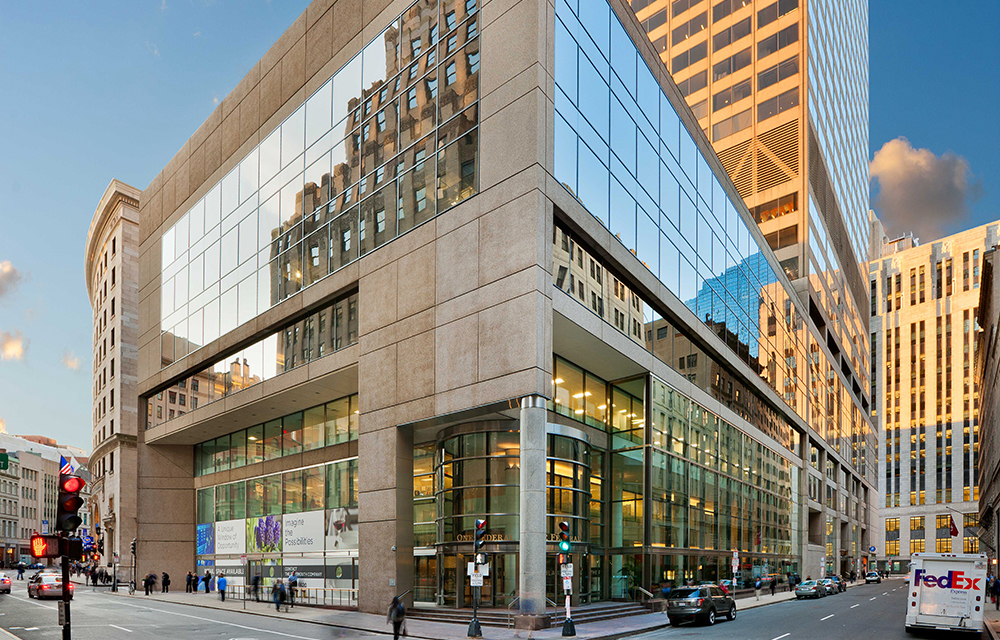
Boston, MA Tishman Speyer has secured a new headquarters lease with Rubin Rudman at One Federal St., its 38-story, 1.1 million s/f tower in the Financial District. Under a 15-year lease, Rubin Rudman’s new headquarters will span 57,844 s/f across One Federal’s entire 23rd and 24th floors and a portion of the 25th floor.







Columns and Thought Leadership

The legislature has spoken: New Hampshire doubles down on housing in commercial zones - by John Sokul
Last year, the New Hampshire Legislature enacted HB 631, a landmark housing measure requiring municipalities to permit multifamily housing in commercially zoned districts. The law generated

Retail infill strategy to activate Pawtucket’s Conant Thread District - by Gaetan Kashala
Until recently, the Conant Thread District consisted of approximately 150 acres of underutilized industrial land spanning Pawtucket and Central Falls. Today, the area is one of the most significant

Revitalized Town Centers: Retail??? - by Carol Todreas
It is now widely accepted that customers want to shop in person at physical stores. Brands know that they do better business in a physical store than just on line so they want to open stores. Demand for retail space by digital merchants, local entrepreneurs, and newly developed national chains

IREM president’s message: Our new reality - Staying ahead of supply chain delays - by Yoany Vargas
Supply chain delays are slowing construction, ratcheting up operating costs, and extending turnover timelines across Greater Boston, directly reducing revenue and increasing the workload for multifamily and