



News:
Brokerage
Posted: February 27, 2026
Artificial intelligence…more clarified…finally - by Daniel Calano

Artificial Intelligence has been the “topic du jour” for quite a while. I have written about its pluses and minuses, and others much more in the know, have explored its ups and downs. Most of the writing is about whether AI will help all things, create more efficiency, speed up work, etc. The flip side is it would eliminate jobs, create unemployment, etc.
AI has long promised creative disruption, but now we are now moving from theory to data, particularly in job growth, or job losses. As you may well know from watching the huge investment in the “top 7” AI stocks, companies like Amazon, Google, Microsoft have spent billions over the last several years, in total some would say, collectively hundreds of billions . As a result, companies assumed the money would be effectively spent, mostly in being the early disruptors, and first providers. Some were panicking about losing their jobs to AI, and some are hoping they would be more efficient and effective.
It was not an exact point of view, but the stock market members saw systematic growth and investment, with high percentage gains in wealth along the way.
However, soon into this, the spent funds, which seemed would promise that AI began to have, now shared doubts, because the pioneers apparently could not determine the end game, i.e., what would they create with AI to justify the investment? After the doubt spread, investors quickly lost faith, and the value of investments had declined by 5-10% within a few weeks.
The good news was that, despite financial losses , and despite growing fears, AI growth would not appear to create immediate questions for workforce, and fewer or immediate job loss. Employment might be “re-calibrated,” but not exasperated, with some clarity to understand where they might be with slower AI changes.
Workforce appeared to have a better view of the future, perhaps with better perspective and understanding. As a for example, with the super -scalers focusing with better outcomes and focus, results at a slower pace, might actually benefit smaller companies, rather than fearing the darker side. It is hoped that small size firms that can “tool-up” more quickly, such as in a vertical, inter-related relationship, can get help that lead to benefits for all. Specifically, AI may well help, rather than hurt in healthcare, legal, logistical, education, and industrial manufacturing.
Of course, all of these assumptions make it hard to understand the effects on real estate, all types of buildings, uses, and time-frames. … hard, if not impossible to plan for this future, of uses and timing.
Nobody can tell for sure at this stage, but hopes and fears of AI, can, just as easily benefit from this combined force of the future!! The more quickly we understand, and produce real estate knowledge, the better off we will be.
Daniel Calano, CRE, is managing partner and principal of Prospectus, LLC, Cambridge, Mass.
MORE FROM Brokerage
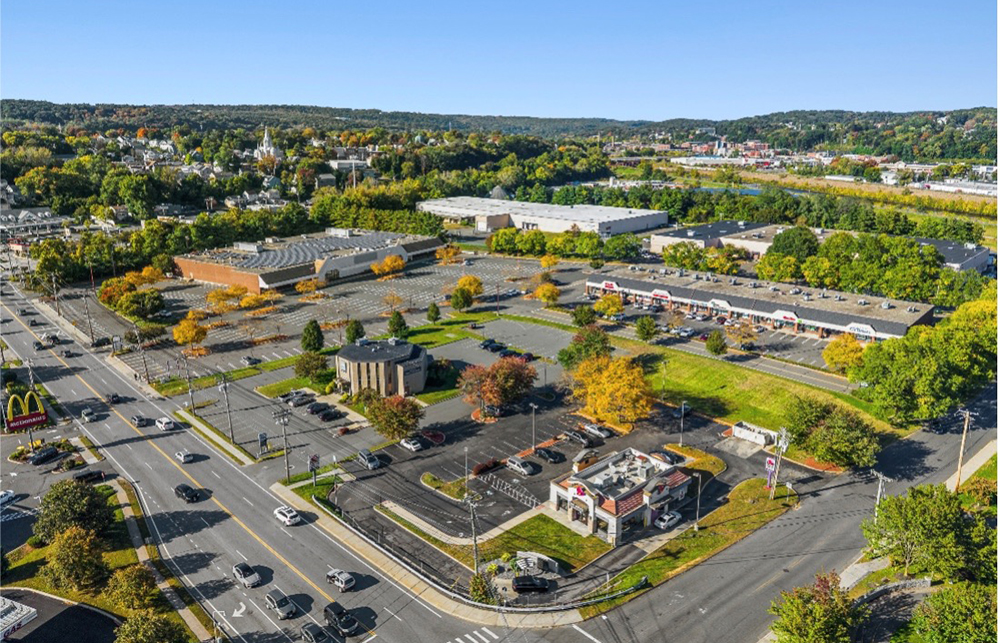
Saugatuck Commercial Real Estate brokers $8.3m sale of Ansonia Landing Shopping Center
Ansonia CT Saugatuck Commercial Real Estate (SCRE) represented Investor Michael Berkowitz in the $8.3 million purchase of Ansonia Landing Shopping Center from a KIMCO-led Partnership. The 91,447 GLA shopping center is located at 100-172 Division St.





Quick Hits

.png)
Columns and Thought Leadership

End of the year retail thoughts - by Carol Todreas
Now what? As the year comes to a close, the state of retail is always in the news. The answers vary greatly depending on who in the various related industries you ask, each offering a unique lens on the challenges and opportunities ahead.

The rise of AI in CRE - And what it means for every skilled profession - A broker & appraiser weighs in - by Bryan Plourde
This may seem self-serving, and I’ll be the first to admit it. But unlike some of the artificial intelligence tools now reshaping our industry, I am fully aware of my own bias. So, hear me out. The rise of AI in commercial real estate is not a distant threat or a speculative headline.
