



News:
Construction Design & Engineering
Posted: November 20, 2014
Call for entries: International design competition for sea-level rise in Boston
The city of Boston, The Boston Harbor Association, the Boston Redevelopment Authority, and the Boston Society of Architects have made available Boston Living with Water, an open international call for design solutions envisioning a vibrant, resilient Boston that is prepared for end-of-the-century climate conditions and rising sea levels.
Launched on October 29 by Boston mayor Martin Walsh to coincide with the 2nd anniversary of Hurricane Sandy, the two-stage competition seeks submissions from leading planners, designers, and thinkers that incorporate concepts and strategies, including Living with Water design principles that will increase Boston's sustainability and climate-change resiliency. Selected finalists will further advance location-specific solutions to coastal flood dangers and rising sea levels that are beautiful and replicable.
"The Boston Living with Water competition is a call to action," said mayor Walsh. "We are asking thinkers, planners, and designers to envision Boston in the year 2100. Our challenge is to evolve with our changing climate and rising seas. Our opportunity is to invest in the future and to become a more resilient, more sustainable, and more beautiful city."
Competition details
The competition asks participants to focus on one, two, or three sites, but multiple entries are also allowed.
Sites
This competition considers the challenges of adapting to climate change and rising sea levels at three sites specifically chosen for their vulnerability and where winning solutions could influence redevelopment activities.
Ranging in scale from Building to Neighborhood to Infrastructure, each site presents challenges that are representational of represent common urban conditions and call for scale-specific solutions. Competition solutions should address the unique aspects of the selected site while being replicable elsewhere.
Site 1: Building—Typical of the existing historic urban waterfront fabric of Boston, the Prince Building, located in the North End, embodies the challenges facing multi-owner residential buildings.
Site 2: Neighborhood—The 100 Acres section of Fort Point Channel is representative of the large urban mixed-use redevelopment opportunities across Boston. It includes development sites, green and blue open spaces, multilevel infrastructure, and existing historic buildings.
Site 3: Infrastructure—Morrissey Boulevard, near the outer harbor and mouth of the Neponset River, provides access to Columbia Point peninsula and a range of residential, commercial, institutional, and open-space areas. It exemplifies the critical transportation infrastructure connecting Boston's neighborhoods.
Eligibility
This is an open competition. Proposals from leading architects, urban planners, urban designers, landscape architects, engineers, academics, and climate-change professionals and thinkers are most welcome.
Schedule
Spanning from October 29, 2014, through June 2015, Boston Living with Water is a two-stage planning and design competition:
The first stage is an open international call for proposals seeking site-specific planning and design solutions from m=ulti-expertise competition teams. Due: January 29, 2015.
The second stage is a finalist competition for selected teams to further develop and refine their proposals. Due: May 29, 2015.
Jury members
Mikyoung Kim, principal, mikyoung kim design; Stefan Behnisch AIA, Hon. FAIA, principal, BEHNISCH ARCHITEKTEN; Kristina Ford, Columbia University; and Kairos Shen, director of planning, Boston Redevelopment Authority, City of Boston Matthew J. Kiefer, Director, Climate Change Resiliency Task Force Coordinator, Goulston & Storrs, Beverly A. Scott, Ph.D. , Chief Executive Officer/General Manager, Massachusetts Bay Transportation Authority, among others.
For full details and to register, visitwww.bostonlivingwithwater.org
Social Media: @BostonLwW
The contest has been funded by the Massachusetts Office of Coastal Zone Management and the Barr Foundation, and organized by the City of Boston, The Boston Harbor Association, the Boston Redevelopment Authority, and the Boston Society of Architects.
MORE FROM Construction Design & Engineering
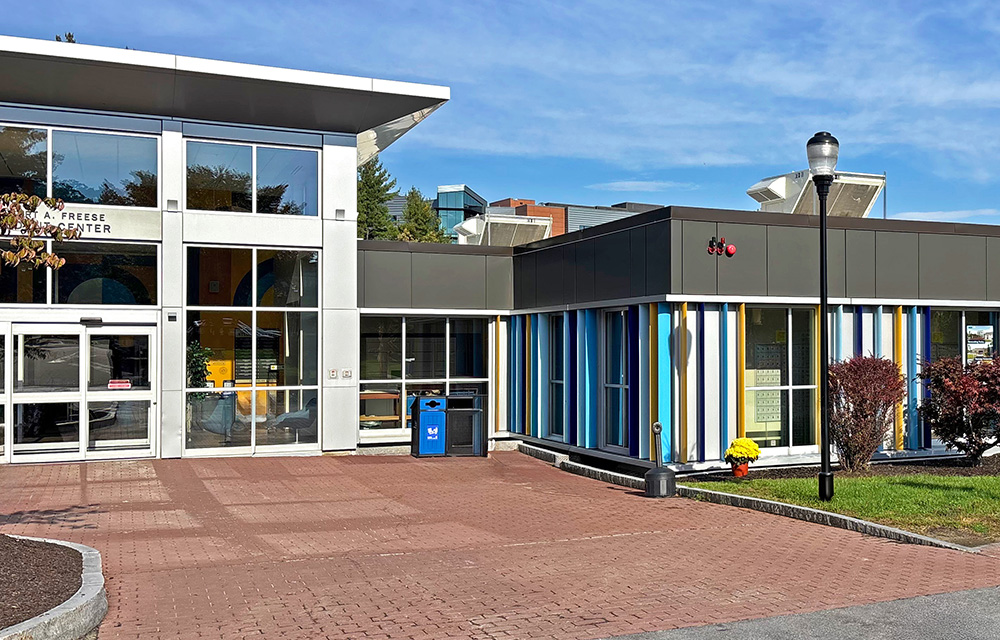
Chapman Construction/Design completes renovations to Freese Student Center at Southern N.H. University
Manchester, NH Chapman Construction/Design (Chapman) completed the second phase of renovations to Southern New Hampshire University’s (SNHU) Robert A. Freese Student Center. Chapman completed the project over two summer sessions,





Columns and Thought Leadership

It’s time to lead: Confronting mental health in construction - by David Watts
As we close Mental Health Awareness Month, we must be clear: May isn’t just about ribbons, hashtags, or lunchtime mindfulness apps. It’s about responsibility to confront hard truths that linger in silence, and to challenge ourselves, as leaders in our industry, to do more.

Navigating tariffs and material uncertainty in today’s construction market - by Karl Ginand and Tiffany Gallo
As headlines around tariffs seem to dominate the news daily, many considering construction projects have anticipated major cost escalations and widespread supply issues. While tariffs haven’t driven pricing spikes to the extent once feared, the lasting impact has been a new layer of uncertainty, affecting more than just budgets.

ABC-Mass. chairman’s message: Rent control isn’t the answer to our housing crisis - by Luiza Mills
As you may know, Massachusetts voters will be weighing in on a number of ballot initiatives in November. Among them is a proposal to impose the nation’s strictest statewide rent control policy. I’d like to tell you why the ABC MA Board

Greenwood Credit Union City Hall Plaza nears completion - by Frank Picozzi
After several years of planning, construction, and anticipation, the community is eagerly awaiting the opening of the Greenwood Credit Union City Hall Plaza and outdoor skating rink later this month.
