


 (1).png)
News:
Owners Developers & Managers
Posted: September 3, 2015
MassDevelopment awards $208,000 grant from Brownfields Redevelopment Fund to Lawrence CommunityWorks
MassDevelopment has awarded a $208,000 grant from the Brownfields Redevelopment Fund to Lawrence CommunityWorks (LCW), a local nonprofit spearheading the Duck Mill - Union Crossing Phase II redevelopment in downtown. The organization will use funds for the site's cleanup, including licensed site professional oversight of above ground storage tank removal and lead-based paint abatement. This second phase of the Union Crossing project is an adaptive reuse of the five-story former cotton and wool manufacturing building known as the Duck Mill, located on the North Canal in downtown. When completed, the 2.2 acre site will consist of 10,000 s/f of commercial space and 73 units of affordable rental housing. The units will provide housing for low-income individuals and families. In total, MassDev. has provided $338,510 in brownfields funds for the second phase of the Union Crossing redevelopment.
"MassDevelopment is pleased to partner with LCW in its efforts to redevelop the Duck Mill, thereby increasing affordable housing and sparking economic activity in a Gateway City," said MassDevelopment president and CEO Marty Jones. "The money from the Brownfields Redevelopment Fund over the last five years has helped this project revitalize a part of the heart of Lawrence."
To finance the nearly $29 million redevelopment, LCW secured a combination of state and federal historic tax credits, state and federal low income housing tax credits, HOME funds, several other housing program funds and permanent financing.
"LCW is thrilled to continue our contributions to the redevelopment of Lawrence's beautiful, historic mill district," said Jessica Andors, executive director of LCW. "This project is the result of intensive planning and visioning with local residents and stakeholders, and tenacious hard work by staff, board, and partners. It will bring both housing and jobs to the area, and advances our role as a catalytic force in Lawrence's resurgence."
MassDevelopment, the state's finance and development agency, works with businesses, nonprofits, financial institutions, and communities to stimulate economic growth across the Commonwealth. During FY2014, MassDevelopment financed or managed 314 projects generating investment of more than $2.9 billion in the Massachusetts economy. These projects are projected to create more than 6,300 jobs and build or rehabilitate more than 1,600 residential units.
MORE FROM Owners Developers & Managers
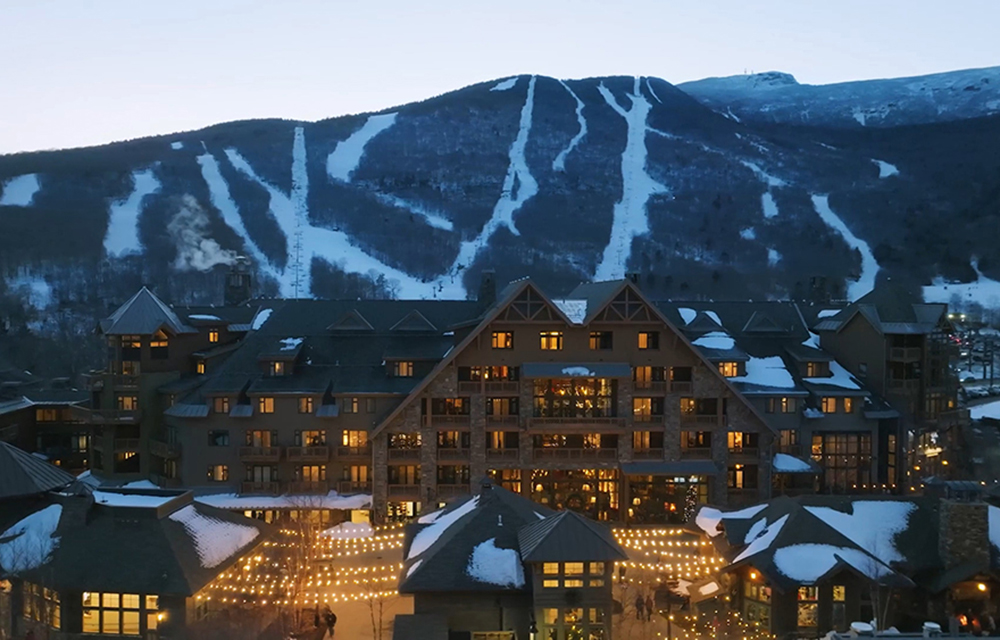
The Lodge at Spruce Peak recognized with Condé Nast Traveler’s 2026 Readers’ Choice Award - #3 in New England
Stowe, VT Condé Nast Traveler revealed the results of its annual Readers’ Choice Awards, with The Lodge at Spruce Peak recognized as the #3 U.S. Resort in New England.




Quick Hits
 (1).png)

Columns and Thought Leadership

The legislature has spoken: New Hampshire doubles down on housing in commercial zones - by John Sokul
Last year, the New Hampshire Legislature enacted HB 631, a landmark housing measure requiring municipalities to permit multifamily housing in commercially zoned districts. The law generated

Retail infill strategy to activate Pawtucket’s Conant Thread District - by Gaetan Kashala
Until recently, the Conant Thread District consisted of approximately 150 acres of underutilized industrial land spanning Pawtucket and Central Falls. Today, the area is one of the most significant

Revitalized Town Centers: Retail??? - by Carol Todreas
It is now widely accepted that customers want to shop in person at physical stores. Brands know that they do better business in a physical store than just on line so they want to open stores. Demand for retail space by digital merchants, local entrepreneurs, and newly developed national chains

IREM president’s message: Our new reality - Staying ahead of supply chain delays - by Yoany Vargas
Supply chain delays are slowing construction, ratcheting up operating costs, and extending turnover timelines across Greater Boston, directly reducing revenue and increasing the workload for multifamily and