


 (1).png)
News:
Owners Developers & Managers
Posted: May 12, 2017
MIT Center for Real Estate to present the “Edge Sessions” as part of World Real Estate Forum May 18-19
Cambridge, MA With myriad revolutionary advances in digital technology and the massive amount of innovation now occurring in the built environment, it can be challenging for commercial real estate industry professionals to keep pace with the flood of information, no matter how useful. In response, the MIT Center for Real Estate (MIT/CRE) will present the “Edge Sessions” as part of their annual World Real Estate Forum to be held on May 18 and 19. The purpose of the sessions is to give those in the industry a clearer picture of the innovation landscape – including technologies that are currently available as well as those still in their formative stages.
“The Edge Sessions are for anybody who is looking at the future of real estate,” said Steve Weikal, head of industry relations at the MIT/CRE, who will lead a panel discussion on digital infrastructure and the Internet of people, places and things. “Last year we talked about blockchain and autonomous vehicles (driverless cars) pretty much before anyone else was talking about it. And this year, one thing we’ll be discussing is the autonomous future of real estate – not autonomous vehicles, but artificial intelligence, robotics, and autonomous technology for real estate, such as how buildings can ‘build’ themselves and then operate autonomously.”
Modules will also include the Future of Cities (featuring leading city builders from around the globe); Big Data, Big Decisions (on the impact of the Big/small/smart data explosion; Accelerating Innovation in Design and the Built Environment; New Models for Investing (including crowdfunding for large scale projects); 3D, Stackable, and Modular: Innovation and the Global Housing Crisis; Understanding the Global Innovation Ecosystem; and Securing the Cyber-Physical Infrastructure and Internet of Things (how to protect buildings and company information from cyber threats).
The conference will also feature panel discussions on development opportunities in the growth markets of Africa, Latin America and India, as well as an examination of the development trends in China. Keynote speaker Skylar Tibbits, co-director and founder of the MIT Self-Assembly Lab, will lead with a discussion of 4D printing (where the fourth dimension is time) to open the two-day conference. MIT/CRE director Albert Saiz is hoping the annual conference will become a “Davos-like experience” for industry leaders.
“There is no leading think tank environment for people to discuss what is going to happen to the global real estate industry from the perspectives of construction, master planning, design, global markets, finance, and marketing trends,” says Saiz. “What we at the MIT Center for Real Estate are striving to do is to be a convening point, to create a network of enlightened leaders in the industry who are then going to change the industry for the greater good.”
The MIT Center for Real Estate, founded in 1983, is home to the first-ever one-year Master of Science in Real Estate Development (MSRED) degree, as well as an integrated suite of professional development courses. The groundbreaking MSRED degree presents a program that is rigorous, concentrated, multidisciplinary, and geared toward direct application.
The MIT Center for Real Estate’s pioneering research investigates the real estate transaction from initial concept to market reality, providing breakthrough knowledge to help organizations capitalize on today’s dynamic markets and technologies.
MORE FROM Owners Developers & Managers
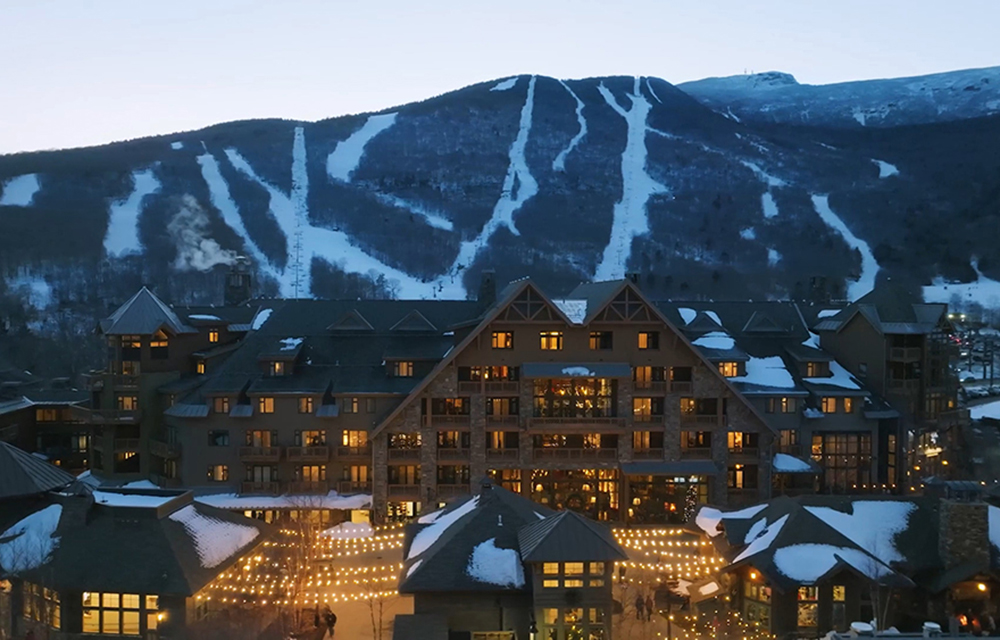
The Lodge at Spruce Peak recognized with Condé Nast Traveler’s 2026 Readers’ Choice Award - #3 in New England
Stowe, VT Condé Nast Traveler revealed the results of its annual Readers’ Choice Awards, with The Lodge at Spruce Peak recognized as the #3 U.S. Resort in New England.




 (1).png)

Columns and Thought Leadership

Retail infill strategy to activate Pawtucket’s Conant Thread District - by Gaetan Kashala
Until recently, the Conant Thread District consisted of approximately 150 acres of underutilized industrial land spanning Pawtucket and Central Falls. Today, the area is one of the most significant

Revitalized Town Centers: Retail??? - by Carol Todreas
It is now widely accepted that customers want to shop in person at physical stores. Brands know that they do better business in a physical store than just on line so they want to open stores. Demand for retail space by digital merchants, local entrepreneurs, and newly developed national chains

IREM president’s message: Our new reality - Staying ahead of supply chain delays - by Yoany Vargas
Supply chain delays are slowing construction, ratcheting up operating costs, and extending turnover timelines across Greater Boston, directly reducing revenue and increasing the workload for multifamily and

The legislature has spoken: New Hampshire doubles down on housing in commercial zones - by John Sokul
Last year, the New Hampshire Legislature enacted HB 631, a landmark housing measure requiring municipalities to permit multifamily housing in commercially zoned districts. The law generated