



News:
Spotlight Content
Posted: June 10, 2022
2022 Ones to Watch: Devon Morse, WPIT, Project Manager / Wetland Scientist at Hancock Associates
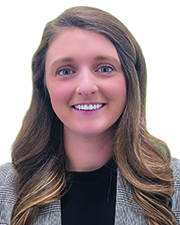
What recent project, transaction or accomplishment are you most proud of? I placed a bid proposal for an Independent Peer Review of Wetlands and Engineering work, and Hancock Associates was selected and awarded as the peer reviewer for the city of Boston Conservation Commission. The scope includes the independent peer review of site work conducted in West Roxbury that has been ongoing since 2006. We continue to expand the services we are offering in the city of Boston and this is a great opportunity for us to broaden our work with the Boston Conservation Commission and the city as a whole.
What does it take to succeed in your specific industry? I think one of the major elements of being successful in the environmental and wetland science industry is to recognize environmental project constraints right away and address them with clients so that there is a better understanding of what the project will entail based on existing physical, biological and natural concentrates. I believe if a wetland scientist develops clear, achievable and measurable goals based on the regulations of not only the Massachusetts Wetlands Protection Act, but also any local ordinance that needs to be reviewed in compliance with any proposed work for a project, they will have a successful outcome in the end.
What led you to your current profession? I always believed I would be a scientist of some sort, whether that would entail working on the coast or in some profession that included coastal work. I studied marine biological sciences in Southern Florida and moved out to Southern California for quite some time. In California, I was able to develop certain interests in the environment, specifically natural resource systems which include techniques to implement wetlands to naturally treat urban runoff in a densely populated part of Orange County. From there I moved to my native state of Massachusetts where we are very fortunate to have an abundant amount of natural wetlands throughout this region. From restoration work to permitting in accordance with MA WPA Standards, I enjoy going out in the field for my job the most.
What are the top 3 items on your bucket list?
- Take a cooking class in a European country.
- Dive off the Great Barrier Reef.
- Own a beach front property some place tropical.
What are you doing when you aren’t working? When I am not working, I am enjoying quality time with my future wife and Great Dane. We enjoy cooking and eating the most. Moving all around the country has brought myself and my family close together now, so hanging out on the beach or by a pool with them is where you will find me in the coming warmer months.
Tags:
Spotlight Content
MORE FROM Spotlight Content

New England Real Estate Journal's 2026 Women in Commercial Real Estate Spotlight
NEREJ's Women in CRE Spotlight celebrates the women making an impact across commercial real estate and the companies that recognize, support and champion them.



Quick Hits

.png)
Columns and Thought Leadership

Shallow-bay wins on 495/128: A renewal-driven market with a thin pipeline - by Nate Nickerson
The Boston industrial market entered mid-2025 in a bifurcated state. Large-block vacancy remains elevated, while shallow-bay along the 495/128 corridor continues to prove resilient. Fieldstone’s focus on this geography positions us squarely in the middle of a renewal-driven, supply-constrained
Limited supply fuels landlord‑friendly conditions in Rhode Island’s industrial market - by Julie Freshman and George Paskalis
As we enter the spring of 2026, the Rhode Island industrial real estate market stands on stable footing, following several years of resilience fueled by constrained supply, steady demand, and dynamic economic conditions.
How do we manage our businesses in a climate of uncertainty? - by David O'Sullivan
These are uncertain times for the home building industry. We have the threat of tariffs mixed with high interest rates and lenders nervous about the market. Every professional, whether builder, broker, or architect, asks themselves, how do we manage our business in today’s climate? We all strive not just to succeed, but
As legacy names recalibrate, new entrants are moving in with fresh capital, new technologies, and business models tailored to today’s supply-chain needs - by Michael Harrington
Southern New Hampshire’s industrial market has always punched above its weight. For decades, the region has attracted a mix of advanced manufacturing, beverage and food producers, logistics operators, and specialty
