


 (1).png)
News:
Owners Developers & Managers
Posted: September 11, 2026
The utility beneath our streets: How wastewater is becoming a renewable energy asset for real estate and communities - by Karen Prescott

Every day, homes, apartments, hospitals, universities, and commercial buildings discharge warm wastewater into sewer systems. That thermal energy can be captured and reused to heat and cool nearby buildings, reducing fossil fuel consumption and lowering operating costs. Massachusetts, New York, and other states are beginning to support pilot projects as wastewater energy recovery has emerged as a practical decarbonization strategy, with hundreds of installations already operating worldwide.
Wastewater Energy Recovery (WWER) is a technology that captures heat and energy from wastewater before it leaves a sewer system or treatment facility. Because wastewater from homes, businesses, and industrial and municipal buildings stays at a relatively stable temperature throughout the year, it can serve as a reliable source of renewable thermal energy. Like geothermal systems, WWER uses heat exchangers and heat pumps to transfer this energy into building heating and cooling systems. Helpfully, it takes advantage of existing wastewater infrastructure rather than requiring underground well fields, which can greatly reduce installation costs.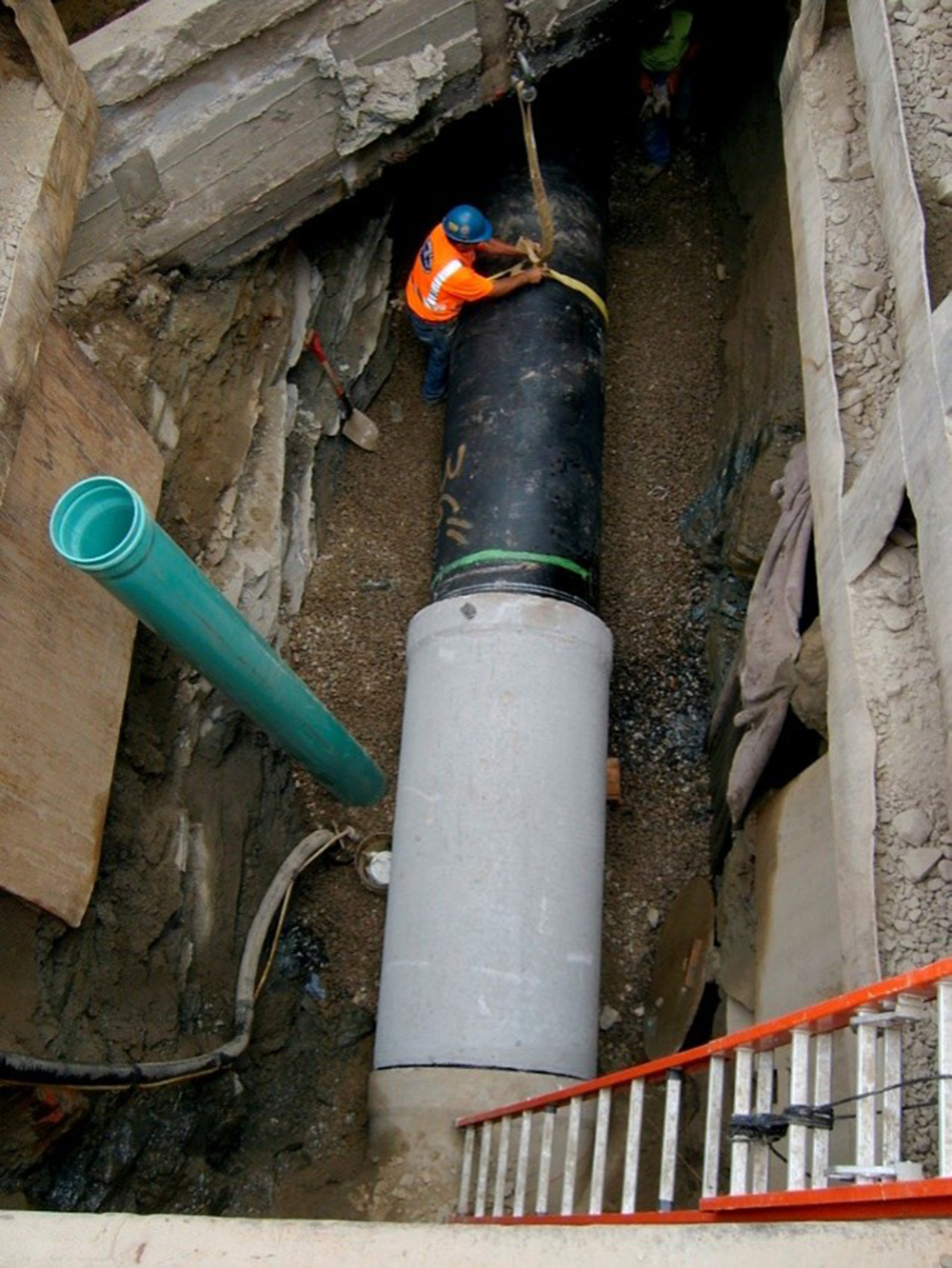
Several technologies are used in WWER systems, including:
• Sewer heat exchangers, which extract heat directly from sewer mains;
• Wastewater-source heat pumps, which transfer and upgrade that heat for building use; and
• Effluent heat recovery systems, which recover energy at treatment plants.
Some facilities also use anaerobic digestion and biogas production to convert organic waste into renewable fuel, while combined heat and power (CHP) systems generate both electricity and usable heat from that biogas, maximizing overall energy efficiency.
WWER offers a range of economic, environmental, and community benefits that makes it an attractive renewable energy strategy for municipalities, developers, institutions, and utility providers alike. By capturing the thermal energy contained in wastewater and using it for building heating and cooling, WWER can significantly reduce operating costs compared to conventional fossil fuel-based systems. Additionally, facility owners can lower their long-term energy expenses while reducing exposure to fuel price volatility and future energy market fluctuations.
WWER also supports Environmental, Social, and Governance (ESG) objectives and broader decarbonization goals. Because wastewater is a renewable and continuously available energy source, using it can reduce greenhouse gas emissions and help communities and organizations meet climate action commitments, carbon reduction targets, and clean energy requirements. As electrification becomes more important in building design, WWER provides a practical pathway toward lower-carbon operations.
From a development perspective, WWER can also create market differentiation. Sustainable energy systems are increasingly attractive to tenants, investors, and institutions seeking environmentally responsible facilities. WWER projects may also support LEED certification, net-zero energy goals, and other green building initiatives.
The technology is particularly well suited for district energy applications that serve multiple buildings. Areas with concentrated and consistent energy demand, such as multifamily housing developments, hospitals, universities, mixed-use districts, and industrial campuses can often realize the greatest economic and environmental benefits from wastewater-based energy systems.
WWER is more than an innovative energy technology. It represents a practical business opportunity for municipalities, utility managers, and private developers seeking to reduce costs, improve sustainability, and increase infrastructure value. Communities across the country are under growing pressure to reduce greenhouse gas emissions, improve climate resilience, control utility costs, and modernize aging infrastructure. WWER addresses these objectives by transforming wastewater systems from simply a necessary public service into a source of renewable thermal energy.
For utility managers, WWER can create new revenue opportunities, improve the long-term value of wastewater infrastructure, and support community sustainability goals without requiring major new land resources. For developers and building owners, access to wastewater-derived energy can provide lower and more predictable heating and cooling costs while enhancing project marketability and supporting LEED, net-zero, and previously mentioned ESG objectives.
At the community level, WWER can support housing development, public facilities, universities, hospitals, and commercial areas through district energy systems. By leveraging existing sewer infrastructure as an energy asset, municipalities can attract investment, support economic development, and advance local climate goals. Massachusetts has demonstrated this potential by funding WWER assessments, design efforts, and pilot projects that help communities move from concept to implementation.
The most sustainable energy source may already be flowing beneath our streets. Communities that begin evaluating WWERR today will be better positioned to reduce costs, meet climate goals, and build more resilient infrastructure for the future.
Karen Prescott is a senior project manager with Weston & Sampson, Portsmouth, NH.
MORE FROM Owners Developers & Managers
The Lodge at Spruce Peak recognized with Condé Nast Traveler’s 2026 Readers’ Choice Award - #3 in New England
Stowe, VT Condé Nast Traveler revealed the results of its annual Readers’ Choice Awards, with The Lodge at Spruce Peak recognized as the #3 U.S. Resort in New England.






Columns and Thought Leadership

Retail infill strategy to activate Pawtucket’s Conant Thread District - by Gaetan Kashala
Until recently, the Conant Thread District consisted of approximately 150 acres of underutilized industrial land spanning Pawtucket and Central Falls. Today, the area is one of the most significant

IREM president’s message: Our new reality - Staying ahead of supply chain delays - by Yoany Vargas
Supply chain delays are slowing construction, ratcheting up operating costs, and extending turnover timelines across Greater Boston, directly reducing revenue and increasing the workload for multifamily and

Revitalized Town Centers: Retail??? - by Carol Todreas
It is now widely accepted that customers want to shop in person at physical stores. Brands know that they do better business in a physical store than just on line so they want to open stores. Demand for retail space by digital merchants, local entrepreneurs, and newly developed national chains

The legislature has spoken: New Hampshire doubles down on housing in commercial zones - by John Sokul
Last year, the New Hampshire Legislature enacted HB 631, a landmark housing measure requiring municipalities to permit multifamily housing in commercially zoned districts. The law generated