


 (1).png)
News:
Owners Developers & Managers
Posted: February 28, 2013
Appeals to the Appellate Tax Board
Imagine a property owner who has a property which is over valued by the local board of assessors.
Then imagine this property owner failing to get a tax abatement because of a procedural technicality.
A taxpayer initially should file an application for abatement with the board of assessors. A taxpayer not happy with the board of assessors' refusal to grant a tax abatement on a parcel of real estate may take an appeal to the Appellate Tax Board (ATB).
However, pursuant to Section 64 of Chapter 59 of the Massachusetts General Laws, the petition must be filed within three months after the date of the decision of the board of assessors or within three months after the date the application is deemed denied.
Whenever the board of assessors fails to act within three months from the date of filing the application for abatement, the application shall be deemed to be denied.
Often a property owner who has a good case for an abatement fails to file the appeal on time. The time requirements are jurisdictional. Failure to comply with the time requirements will mean that the ATB must dismiss the appeal.
Most applications for abatement were filed by February 1st. Quite often, the board of assessors issues a denial in March. Therefore, April, May, and June are the months when many appeals are filed with the ATB.
Municipalities are having budgetary problems. The assessors and the appraisal firms hired by the assessors do not necessarily have the expertise or the will to determine the actual fair cash value of property. It is up to owners, therefore, to appeal to the ATB on time in order to pay no more real estate taxes than the law requires.
It is obviously very unfortunate if a property owner is prevented from getting tax relief because he failed to appeal to the ATB on time.
Saul Feldman, Esq. is a real estate attorney with Feldman & Feldman, P.C., Boston, Mass.
MORE FROM Owners Developers & Managers
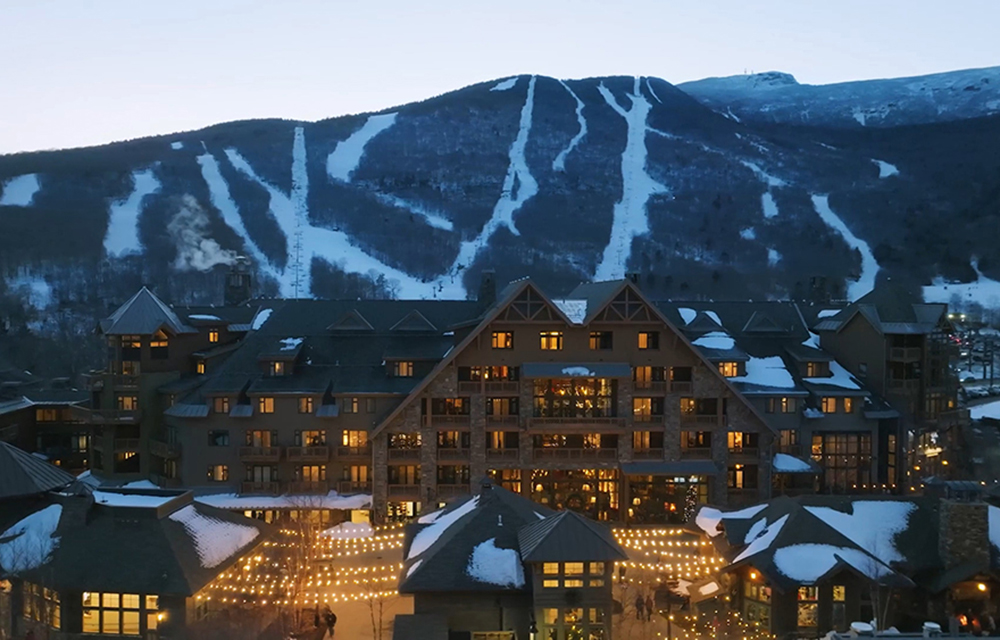
The Lodge at Spruce Peak recognized with Condé Nast Traveler’s 2026 Readers’ Choice Award - #3 in New England
Stowe, VT Condé Nast Traveler revealed the results of its annual Readers’ Choice Awards, with The Lodge at Spruce Peak recognized as the #3 U.S. Resort in New England.





Quick Hits


Columns and Thought Leadership

IREM president’s message: Our new reality - Staying ahead of supply chain delays - by Yoany Vargas
Supply chain delays are slowing construction, ratcheting up operating costs, and extending turnover timelines across Greater Boston, directly reducing revenue and increasing the workload for multifamily and

Revitalized Town Centers: Retail??? - by Carol Todreas
It is now widely accepted that customers want to shop in person at physical stores. Brands know that they do better business in a physical store than just on line so they want to open stores. Demand for retail space by digital merchants, local entrepreneurs, and newly developed national chains

The legislature has spoken: New Hampshire doubles down on housing in commercial zones - by John Sokul
Last year, the New Hampshire Legislature enacted HB 631, a landmark housing measure requiring municipalities to permit multifamily housing in commercially zoned districts. The law generated

Retail infill strategy to activate Pawtucket’s Conant Thread District - by Gaetan Kashala
Until recently, the Conant Thread District consisted of approximately 150 acres of underutilized industrial land spanning Pawtucket and Central Falls. Today, the area is one of the most significant