



News:
Construction Design & Engineering
Posted: March 27, 2026
Ask the Electrician: When is the best time for educational facilities to plan for summer maintenance?

In the world of institutional management, the calendar is deceptive. We talk about summer maintenance, but from an electrical perspective, the most critical work happens while the snow is still melting. The months of March and April are the best strategic window for your facility to plan for the summer. The difference between a chaotic July and a productive one comes down to the decisions you make now.
While summer is still the best time for major electrical work because buildings are less occupied, the complexity of modern campus systems has increased. Between the integration of EV charging stations, sophisticated HVAC controls, and high-density classroom technology, you don’t want to take a costly ‘wait until it breaks’ approach to maintenance.
In this Ask The Electrician column, we’ll cover what electrical maintenance tasks schools and institutions should prioritize as the 2026 summer shutdown approaches.
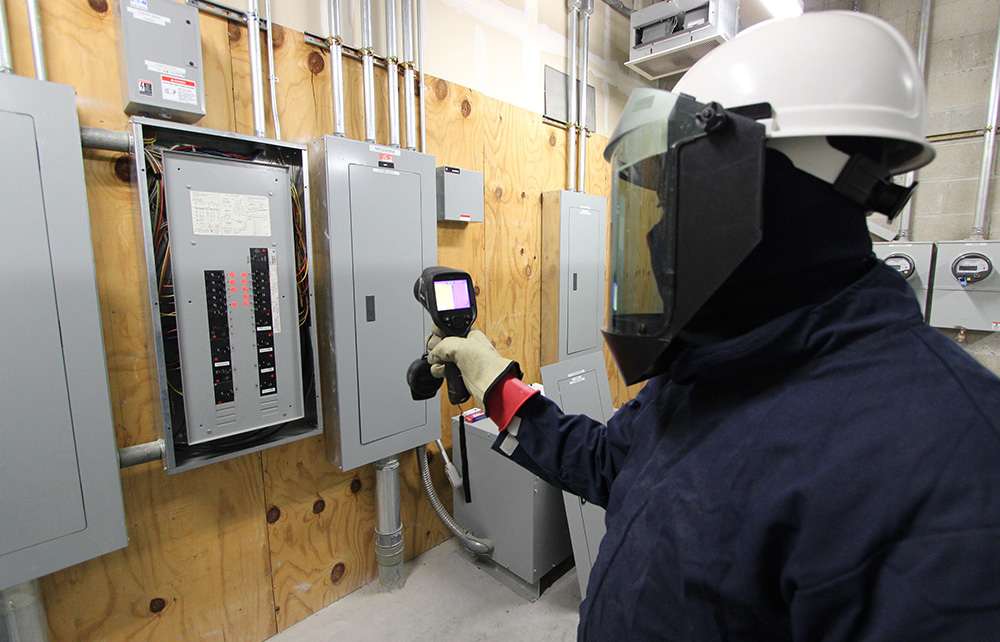
1. Identify Hot Spots Before the Load Drops. Modern preventive maintenance relies on data. March is the ideal time to schedule Infrared (IR) Thermography scans while your buildings are still under full operational load. These scans identify hot spots in panels and switchgear (invisible to the naked eye) that indicate loose connections or failing components. This is also the perfect time to consider installing IR windows in switchboards or distribution gear. These windows allow for the scanning of specific termination points in the future without the need to remove covers or expose staff to live parts. Identifying these needs now allows you to order long-lead-time parts today so they arrive before the students leave for summer break.
2. Service the Heart of the Building. Electrical distribution equipment is often out-of-sight, out-of-mind until it fails. Your main distribution panel is the heart of your building, and your summer plan should prioritize comprehensive servicing. This includes exercising breakers that haven’t been cycled in years and can seize up, failing to trip during a fault or failing to re-engage after a scheduled shutdown. Additionally, electrical rooms deserve the same level of cleanliness as your classrooms. Make sure they are clear of debris and dust to prevent overheating and maintain easy access. Keep in mind that in 2026, many insurance providers now require documented proof of this switchgear maintenance to maintain institutional coverage.
3. Prioritize Life Safety Systems: Spring is the time to audit your emergency lighting, exit signage, and fire alarm systems. With the shift toward networked emergency lighting, use these months to verify that battery backups and automated reporting systems are functioning. Use this window to also start planning for life safety generator preventative maintenance. These gensets utilize batteries, battery chargers, and circuit breakers that must be exercised and maintained to ensure they function when they are needed most. It is much easier to replace a driver in May than to fail a fire marshal inspection in September. Ensuring these systems are compliant before the summer rush allows for a smoother, more predictable maintenance schedule.
4. Optimize the Smart Campus: As institutions adopt IoT-based lighting and climate controls, your summer maintenance should include firmware updates and sensor calibrations. These systems are only as efficient as their programming. Ensuring your smart building hasn’t drifted from its efficiency targets is key to managing rising energy costs and hitting sustainability goals. By reviewing these digital systems in the spring, you can identify which sensors or controllers require physical attention during the summer shutdown.
Don’t treat the summer as the time to find problems, treat it as the time to fix the problems you identified in the spring.
Reputable electrical contractors reach peak capacity quickly during the summer months. By securing your slot and finalizing your budget in March, you ensure that when the students leave in June, your team is ready to hit the ground running for a safe, efficient, and reliable fall semester.
Edward Gould is operations center production area manager at Interstate Electrical Services Corp., Billerica, Mass.
MORE FROM Construction Design & Engineering

Breathing easier: Elevating indoor air quality and performance in New England commercial spaces - by David Capra
cross the New England commercial real estate landscape, from urban life sciences hubs in Greater Boston to academic research facilities throughout the region, the metrics defining high-performing buildings are shifting. Tenants, developers, and facility owners are placing a renewed focus on an invisible yet vital asset: indoor air quality (IAQ).





Quick Hits


Columns and Thought Leadership

Greenwood Credit Union City Hall Plaza nears completion - by Frank Picozzi
After several years of planning, construction, and anticipation, the community is eagerly awaiting the opening of the Greenwood Credit Union City Hall Plaza and outdoor skating rink later this month.

ABC-Mass. chairman’s message: Rent control isn’t the answer to our housing crisis - by Luiza Mills
As you may know, Massachusetts voters will be weighing in on a number of ballot initiatives in November. Among them is a proposal to impose the nation’s strictest statewide rent control policy. I’d like to tell you why the ABC MA Board

Navigating tariffs and material uncertainty in today’s construction market - by Karl Ginand and Tiffany Gallo
As headlines around tariffs seem to dominate the news daily, many considering construction projects have anticipated major cost escalations and widespread supply issues. While tariffs haven’t driven pricing spikes to the extent once feared, the lasting impact has been a new layer of uncertainty, affecting more than just budgets.
Breathing easier: Elevating indoor air quality and performance in New England commercial spaces - by David Capra
cross the New England commercial real estate landscape, from urban life sciences hubs in Greater Boston to academic research facilities throughout the region, the metrics defining high-performing buildings are shifting. Tenants, developers, and facility owners are placing a renewed focus on an invisible yet vital asset: indoor air quality (IAQ).
